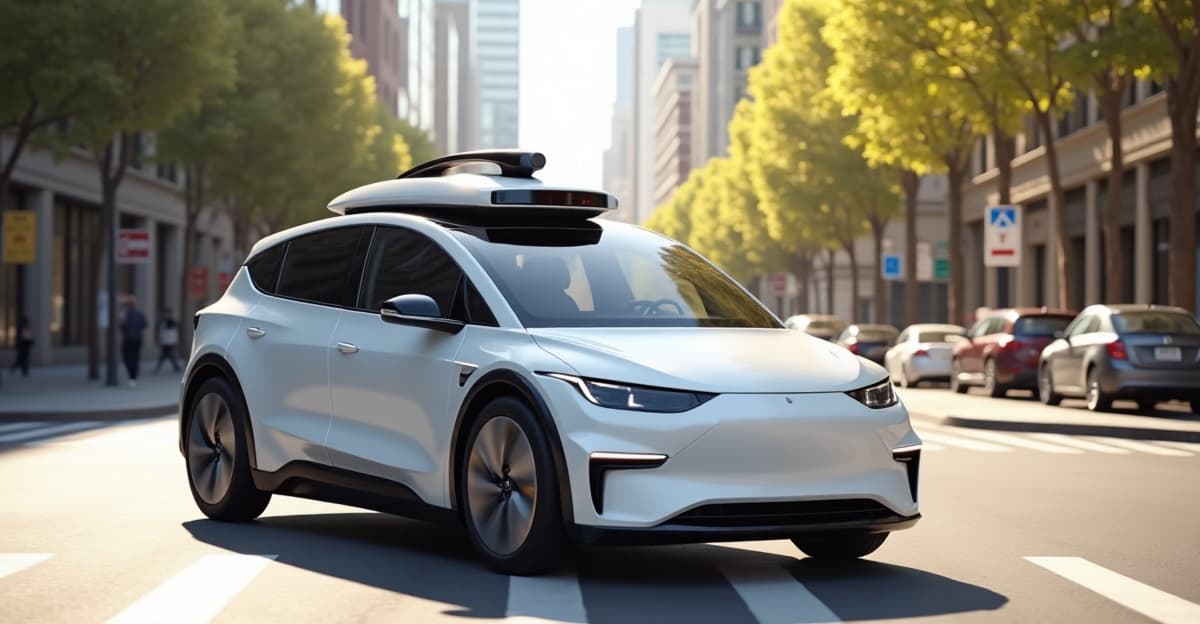
Waymo Secures $5 Billion Debt Financing for Global Robotaxi Expansion
This article was created with the help of artificial intelligence.
Key Takeaways
- On October 6, 2026, Waymo announced an increase of its first debt financing to $5 billion; the original target was more than $3 billion.
- The financing is used to expand the robotaxi fleet and cover rising AI and computing costs, with Waymo identifying growing compute expenses as a separate financing need.
- Lenders include private credit investors PIMCO, Blackstone, and Sixth Street Partners; the loan is unrated and carries an interest rate of 5.25 percentage points above the reference rate.
- Waymo completed a $16 billion equity financing in February 2026, valuing the company at $126 billion upon closing; the debt financing avoids further dilution of existing shareholders.
- The company currently operates more than 500,000 paid rides per week in 14 to 15 US cities and aims to reach one million weekly rides across 20 cities worldwide by year-end.
- International expansion includes a launch in London in 2026, commercial operations in Tokyo starting in 2027, and Munich as the first EU market at the end of 2027.
Waymo, Alphabet's autonomous driving subsidiary, announced on October 6, 2026, the increase of its first debt financing to $5 billion. This significantly exceeds the original target of more than $3 billion and indicates stronger-than-expected demand from institutional investors. Goldman Sachs arranged the debt financing, with private credit investors PIMCO, Blackstone, and Sixth Street Partners participating.
The loan is unrated, meaning no rating agency has assigned a credit rating. Lenders conduct their own risk analyses. The interest rate is 5.25 percentage points above the reference rate.
Use of Funds: Fleet Expansion and Rising AI Costs
Waymo plans to use the fresh capital for two main purposes: expanding its robotaxi fleet and financing rising costs for AI and computing power. The company explicitly identified growing compute expenses as an item large enough to justify a separate financing component.
Currently, Waymo operates more than 500,000 paid rides per week in 14 to 15 US cities. By the end of 2026, the company aims to achieve one million weekly rides across 20 cities worldwide.
Strategic Shift: Debt Instead of Equity
The debt financing marks a strategic shift for Waymo. Previously, the company financed itself exclusively through equity. In February 2026, Waymo completed a $16 billion financing round that valued the company at $126 billion upon closing.
The shift to debt financing avoids further dilution of existing shareholders, including parent company Alphabet. The price is a fixed obligation: interest payments must be made regardless of whether operational targets are achieved.
International Expansion: London, Tokyo, and Munich
International expansion is the focus of capital deployment. Waymo plans to launch in London in 2026, with commercial operations in Tokyo scheduled for 2027. Munich is set to follow as the first European Union market at the end of 2027. Test rides have been running in Tokyo since 2025, in London since April 2026, and in Munich since August 2026.
The increase in financing from $3 billion to $5 billion shows that lenders were willing to provide Waymo with additional capital beyond the original target. This indicates strong demand in the private credit market for capital-intensive technology companies in autonomous driving—even without a traditional credit rating.
Significance for the Private Credit Market
The transaction demonstrates that major institutional lenders outside the traditional banking sector are willing to finance AI-intensive business models with high capital requirements. PIMCO, Blackstone, and Sixth Street Partners are among the leading players in the private credit segment, which has grown significantly in recent years and increasingly finances technology companies.
For Alphabet, the transaction means that the Waymo unit can advance its expansion partly without additional funds from the parent company. At the same time, Waymo must now meet interest and repayment obligations—a disciplinary function that does not exist with pure equity financing.
Sources
- Waymo upsizes its first debt deal to $5 billion to fund global expansion
- Are you a robot?
- Waymo upsizes debut private loan to $5 billion to fund expansion - Bloomberg
- Waymo boosts first debt deal to $5 billion in robotaxi push - TT
- Waymo-Blog: Accelerating our global growth – Waymo raises $16 billion investment round (02.02.2026)
- FTN News: Waymo Robotaxis Tokio 2027, München Ende 2027, Singapur 2028 (29.09.2026)
- TechCrunch: London gets closer to its first robotaxi service as Waymo begins testing (14.04.2026)