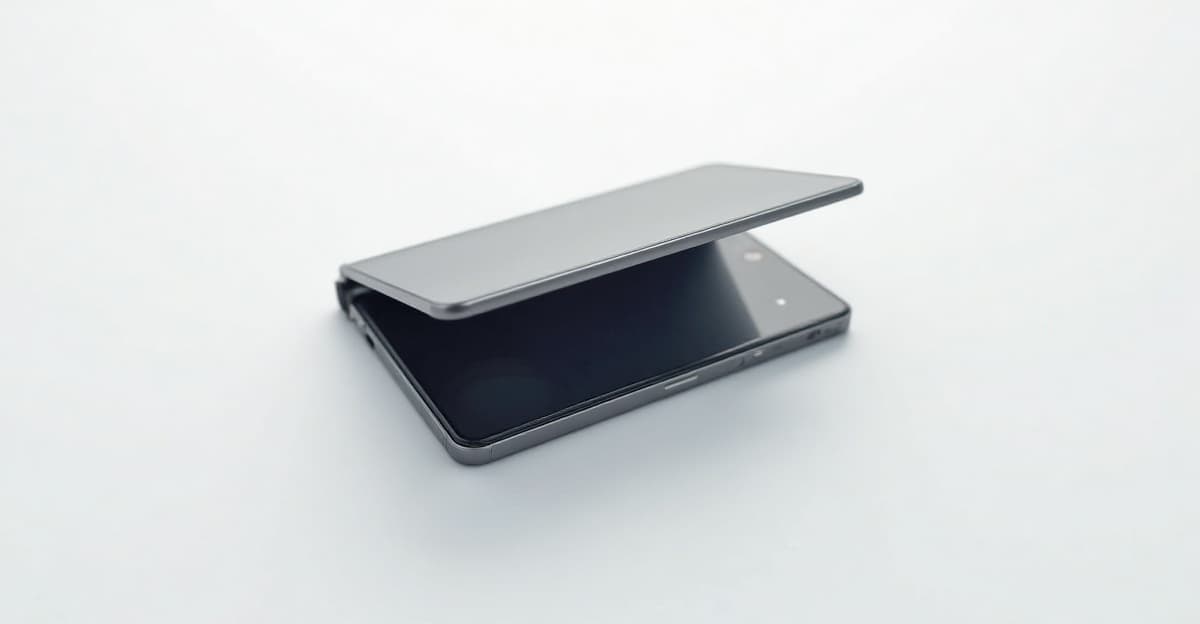
Foldable iPhone as Growth Driver 2027: Why Apple Needs a New Product Segment
This article was created with the help of artificial intelligence.
Key Takeaways
- Rothschild & Co. upgraded Apple on August 17, 2026 from 'Neutral' to 'Buy' and raised the price target from 260 USD to 400 USD
- Analyst Timm Schulze-Melander forecasts 14 million iPhone Ultra Foldable sales in fiscal year 2027 and a 11% increase in average iPhone selling prices through June 2027
- Counterpoint Research expects 25% market share for Apple in the foldable phone market in the first year after market launch in July 2026
- Analyst Ming-Chi Kuo warned in July 2026 of supply constraints: only 500,000 to 1 million units could be delivered in the third quarter
- Excessive concentration on iPhone sales and rising memory prices due to geopolitical restrictions increase margin risk according to analysis from June 6, 2026
- Apple recorded a 13% stock price increase in 2026 but recently had to accept an 8% decline
Key Takeaways
- Rothschild & Co. upgraded Apple on August 17, 2026 from "Neutral" to "Buy" and raised the price target from 260 USD to 400 USD
- Analyst Timm Schulze-Melander forecasts 14 million iPhone Ultra Foldable sales in fiscal year 2027 and a 11% increase in average iPhone selling prices through June 2027
- Counterpoint Research expects Apple to capture 25% market share in the foldable phone market in the first year after market launch in July 2026
- Analyst Ming-Chi Kuo warned in July 2026 of supply constraints: only 500,000 to 1 million units could be delivered in the third quarter
- Excessive concentration on iPhone sales and rising memory prices due to geopolitical restrictions increase margin risk according to analysis from June 6, 2026
- Apple recorded a 13% stock price increase in 2026, but recently had to accept an 8% decline
Analyst Upgrade Sees Undervalued Potential
Rothschild & Co. analyst Timm Schulze-Melander upgraded Apple on August 17, 2026 from "Neutral" to "Buy" and raised the price target from 260 USD to 400 USD. The rationale: the market is underestimating the strength in Apple's product roadmap and the entry into the foldable smartphone segment. The planned iPhone Ultra Foldable positions Apple in the ultra-premium segment, which aligns with the company's brand positioning.
Schulze-Melander forecasts sales of 14 million iPhone Ultra Foldable units for fiscal year 2027. These sales figures are expected to increase average iPhone selling prices (ASP) by 11% through June 2027. The cannibalization effect on traditional iPhone models would be only 2%, according to the analyst.
Counterpoint Research shared a similarly optimistic assessment in July 2026. The market research company forecasts 25% market share for Apple in the foldable phone market in the first year after market launch. Morgan Stanley confirmed its Overweight rating in March 2026 with a price target of 315 USD. Analyst Erik Woodring sees iPhone revenues 3% above consensus for 2026 and 4% higher for 2027.
Why Apple Needs a New Product Segment
An analysis from June 6, 2026 identifies several structural risks that underscore Apple's dependence on traditional iPhone business. Excessive concentration on iPhone sales limits revenue diversification and increases vulnerability to smartphone market weakness. New hardware and AI wearables show no convincing traction as near-term revenue diversification mechanisms.
Rising memory prices and geopolitical restrictions – particularly U.S. resistance to Chinese memory suppliers – are putting pressure on input costs. Apple may be forced to pay higher prices or accept tighter supply windows. Gross margins could come under pressure, carrying the risk of missing revenue targets in upcoming quarters.
The forward P/E of approximately 34.8x already prices in robust growth and margin expansion. Error tolerance is limited: disappointments regarding growth expectations directly impact valuation. The CEO transition to John Ternus brings additional execution risks regarding AI strategy and potentially increasing capital intensity.
Supply Constraints Could Delay Launch
Analyst Ming-Chi Kuo warned in July 2026 of significant supply constraints for the foldable iPhone. The device could launch several months after the rest of the iPhone 18 lineup. In the second half of 2026, 7 to 8 million units are expected to be assembled, but in the third quarter only 500,000 to 1 million units could be delivered – significantly below expected volumes for iPhone 18 Pro and Pro Max.
A possible scenario: Apple presents the foldable iPhone alongside the iPhone 18 lineup, but delays pre-orders and retail availability by several weeks. According to CNBC and Nikkei Asia, Apple plans at least five new iPhone models by early 2027. Product variety increases supply chain complexity and could strain resources further.
Stock Price Performance and Valuation
Apple stock recorded a 13% increase in 2026. However, the stock recently had to accept an 8% decline. The NASDAQ Composite, in which Apple is among the largest positions, was trading at 26,217.83 points on September 2, 2026 – up 0.45% from the previous day.
The valuation with a forward P/E of around 34.8x is well above historical averages and leaves little room for disappointments. Rothschild & Co., however, sees significant upside potential: the 400 USD price target implies upside potential of more than 50% compared to current levels.
From a cash flow perspective, the outlook remains muted. Limited cash flow guidance reduces near-term upside potential, while concentrated revenue sources restrict share buyback and financing flexibility. A successful foldable iPhone could alleviate these constraints by unlocking higher margins and additional revenue streams.
Opportunities and Risks for Investors
The foldable iPhone represents a strategic turning point for Apple. Entry into the growing foldables segment could reduce iPhone dependence while significantly increasing average selling prices. The forecast of 14 million sales in the first full fiscal year would be a remarkable start in a niche market dominated so far by Samsung and other Asian manufacturers.
However, the risks remain substantial. Supply constraints could delay market entry and dampen demand. Rising input costs and geopolitical tensions in the supply chain increase uncertainty. The high valuation leaves little room for execution errors – especially during a CEO transition and intense AI investments.
For investors in the DACH region, this means: the Apple stock remains a highly valued growth bet on the company's ability to successfully establish new product categories. The foldable iPhone could be the catalyst Apple needs – or another hardware experiment without a major impact on revenue diversification.