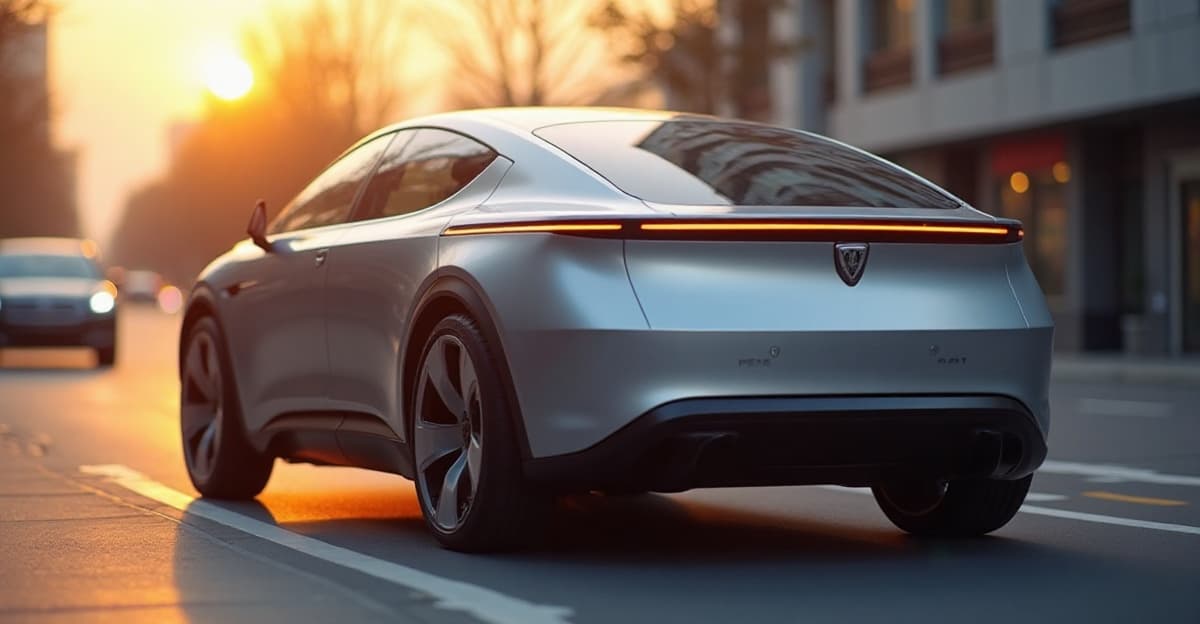
Tesla Cybercab Launch September 2026: What Investors Can Expect from the Autonomous Robotaxi
This article was created with the help of artificial intelligence.
Key Takeaways
- Tesla confirmed on 23 August 2026 the Cybercab launch for 3 September 2026 in Austin – a two-door robotaxi without steering wheel and pedals developed exclusively for autonomous driving
- Tesla stock closed on 28 August 2026 at $348.75 (-1.71%), after falling on 26 August despite the launch confirmation – over 30 days the share was down 10.91%, over 90 days 16.04%
- Nevada approved licenses in the week of 20 August 2026 for up to 8,000 autonomous vehicles in Clark County, around 5,000 for Tesla, 1,000 for Waymo and 1,000 for Uber
- Gary Black of Future Fund called Tesla's P/E of around 200 hard to justify on 18 August 2026 and criticized investors for celebrating despite no evidence of flawless autonomous driving without safety oversight
- Prediction markets gave the Cybercab only 18% probability on 24 August 2026 of coming to market in 2026 for $30,000 or less
Tesla confirmed on 23 August 2026 an official launch event for the Cybercab on 3 September 2026 in Austin, Texas. The two-door vehicle without a steering wheel and pedals marks the first car developed from the ground up for autonomous driving by the manufacturer. Invitations for the exclusive event circulated over the weekend of 23–25 August before Tesla published confirmation via X.com.
Tesla stock closed on 28 August 2026 at $348.75, down $6.06 or 1.71%. On 26 August the share price fell despite the launch confirmation. Over 30 days the stock was down 10.91%, over 90 days 16.04%. The five-year return stands at 44.12%, although the Nasdaq-100 rose by 98% in the same period.
Cybercab without steering wheel: Tesla's robotaxi bet takes shape
The Cybercab is a two-door robotaxi that relies entirely on Tesla's Full Self-Driving (FSD) software. It extends the robotaxi fleet that Tesla launched in Austin last year with modified Model Ys. Customers who used Tesla's existing robotaxi service in Austin by 23 August could register for a lottery draw for invitations – winners were selected on 25 August.
The vehicle has neither steering wheel nor pedals and thus relies on full autonomy. Tesla must demonstrate to regulators, municipalities and competitors in Clark County and other regions that the Cybercabs can safely drive without occupants in the driver's seat.
Nevada issues licenses for 8,000 robotaxis
The Nevada Transportation Authority unanimously approved licenses in the week of 20 August 2026 for commercial operation of robotaxis in Clark County (Las Vegas metropolitan area). Tesla, Alphabet's Waymo and Uber received permission to deploy up to 8,000 driverless vehicles over the coming twelve months.
- Tesla: Around 5,000 robotaxis – the largest allocation. The chief engineer of the Cybercab explained to regulators that Tesla expected around 2,500 vehicles in operation within one year. The 5,000 is a ceiling.
- Waymo: Up to 1,000 vehicles, described as the market leader in autonomous driving.
- Uber: 1,000 vehicles through partnerships with Hyundai-backed Motional and Amazon's Zoox (which holds a separate license for 100 vehicles).
Taxi and limousine associations warned of oversaturation and traffic problems in the "Golden Triangle" between the airport and Las Vegas Strip.
Investors remain skeptical: valuation in focus
The announcement of the Cybercab launch serves as a near-term catalyst, but investor commentary shows considerable skepticism about near-term value accrual. Investors are calling for measurable progress in the autonomous business before assigning higher value to the opportunity.
Gary Black, managing partner of Future Fund, pointed on 18 August 2026 to a "huge disconnect" between the high autonomy expectations of bulls and Tesla's stock performance. Black argued:
- Even if Tesla solves autonomous driving without supervision, other manufacturers will do so too.
- Tesla's price-to-earnings ratio (P/E) for 2026 stands at around 200 – hard to justify.
- Although there is no evidence that the new Cybercab can drive flawlessly without safety oversight, bulls celebrated as if Tesla were the only manufacturer to have nearly perfected autonomous driving.
Tesla's stock valuation is based on the assumption that the company can turn its robotaxi fleet into an autonomous ride-hailing network – in addition to selling FSD subscriptions to private owners at software-like margins. The Cybercab hype brings this high valuation back into focus.
Price forecast under $30,000: Only 18% probability
Prediction markets gave traders on 24 August 2026 only an 18 percent chance that CEO Elon Musk will deliver a Cybercab in 2026 for $30,000 or less. This shows limited confidence in affordable pricing in the current year.
A successful Cybercab launch would extend Tesla's robotaxi service beyond modified Model Ys to the purpose-built vehicle that Musk is staking his autonomy strategy on. However, Tesla must continue to prove that Cybercabs can operate safely without a driver – both to regulators and to competitors and municipalities in Clark County and other markets.
Investors are focused on evidence that autonomous driving can generate significant revenue. Implementation and commercialization of the robotaxi program remain central to the market's valuation of the opportunity.