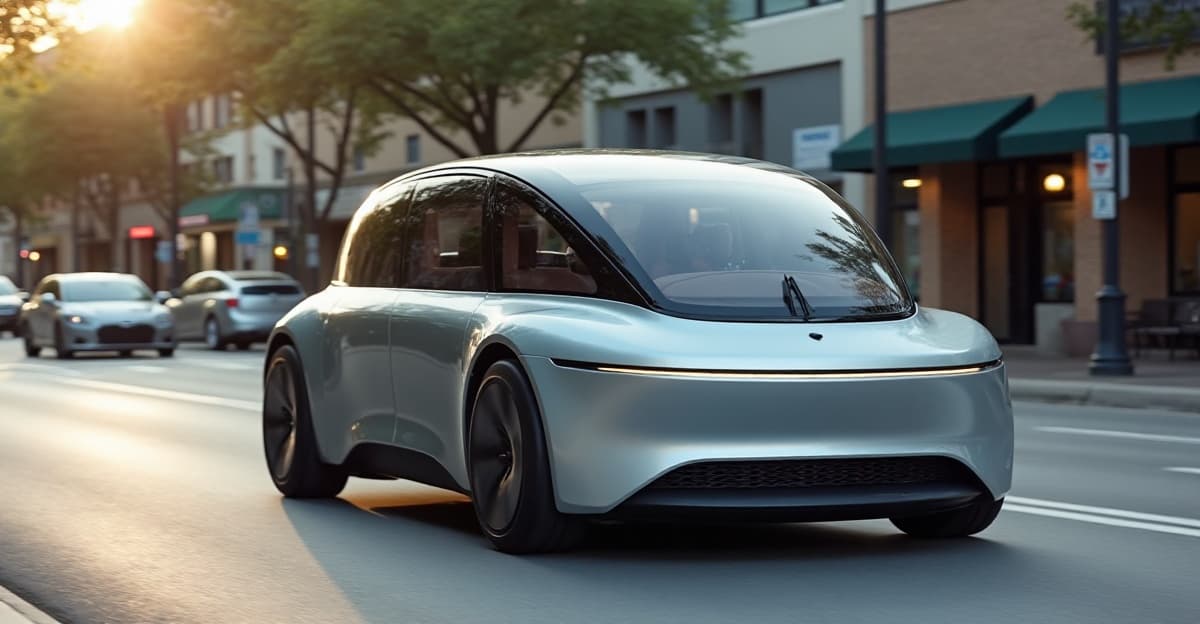
Tesla Cybercab Launch in September: What Investors Should Expect from the Autonomous Taxi Service
This article was created with the help of artificial intelligence.
Key Takeaways
- Tesla presents the Cybercab on September 3, 2026 in Austin, an autonomous two-seater vehicle without a steering wheel and pedals with consumption of 165 Wh per mile
- Tesla's autonomous fleet currently comprises around 20-30 vehicles with cumulative mileage of approximately 380,000 miles (as of July 2026)
- By comparison, Waymo operates approximately 3,000 driverless vehicles and has logged over 220 million miles in autonomous operation
- The Cybercab uses the same Full Self-Driving software stack as the Model Y Robotaxis deployed since June 2025 in Austin
- The Cybercab's two-seater design reduces passenger capacity compared to the currently deployed Model Y vehicles
Tesla confirmed on August 24, 2026 the presentation of the Cybercab for September 3, 2026 in Austin, Texas. The autonomous two-seater vehicle without a steering wheel or pedals will be accessible to the public via a livestream, while in-person attendance remains limited to invited guests. Invitations were extended primarily to winners of a Robotaxi sweepstakes, announced on August 26, 2026.
Cybercab: Technical Specifications and Efficiency
With consumption of around 165 Wh per mile, the Cybercab is the most efficient electric vehicle Tesla has produced to date, according to the company's own statements (as of May 2026). With an empty weight of 1,412 kilograms (3,113 pounds), the vehicle is significantly lighter than a Model Y. Tesla's AI4 hardware is used to control the autonomous functions.
However, the two-seater design comes with a capacity disadvantage compared to the Model Y vehicles currently deployed in the Robotaxi service. While efficiency per mile increases, passenger capacity per trip decreases – a trade-off that could affect the service's profitability.
Integration into the Existing Robotaxi Service
The Cybercab will be integrated into Tesla's already-running Robotaxi service, which launched in Austin in June 2025 – more than a year ago. Users can book the vehicle through the Tesla Robotaxi app, either in addition to or as a replacement for the currently deployed Model Y Robotaxis. Crucially: The Cybercab uses the same Full Self-Driving software stack as the already-operating vehicles. It is not a new autonomous driving system, but rather the same technology in a new vehicle format.
Fleet Size Compared to Competition
The scale of Tesla's autonomous fleet remains modest. According to information from August 24-29, 2026, the unsupervised autonomous fleet comprises around 20 to 30 vehicles across all markets. In spring 2026, the peak was around 25 vehicles. The cumulative miles driven without a safety driver amounted to approximately 380,000 miles according to Tesla's earnings call in July 2026.
By comparison: Waymo, the Alphabet subsidiary and leading provider of autonomous taxi services, operates approximately 3,000 driverless vehicles, conducts over 500,000 paid rides weekly, and has logged more than 220 million miles in driverless operation. Tesla's entire unsupervised driving distance accounts for less than 0.2 percent of Waymo's total performance. The Tesla fleet is smaller than a single Waymo depot.
Regulatory Environment and Strategic Importance
Regulatory oversight of autonomous vehicles remains strict, according to sources from August 2026. Tesla's Cybercab rollout occurs in a market environment where regulators are intensively examining the operation of autonomous vehicles.
For Tesla, the Robotaxi service is considered a central component of the growth strategy. Sources from August 24 and 25, 2026 describe the Cybercab launch as a "decisive moment" for the company's autonomous driving strategy and as the "next step" in efforts to develop self-driving technology, which is considered central to the company's future growth plans.
What Investors Should Note
The September 3 event gives Tesla an opportunity to demonstrate progress in autonomous driving. However, investors should keep the scale in perspective: After more than a year of operation, the service operates with a fleet size that lags far behind established competitors. The Cybercab's efficiency gains are offset by reduced passenger capacity. Whether and when Tesla achieves fleet scaling remains unclear – the regulatory environment will likely play an important role in this.