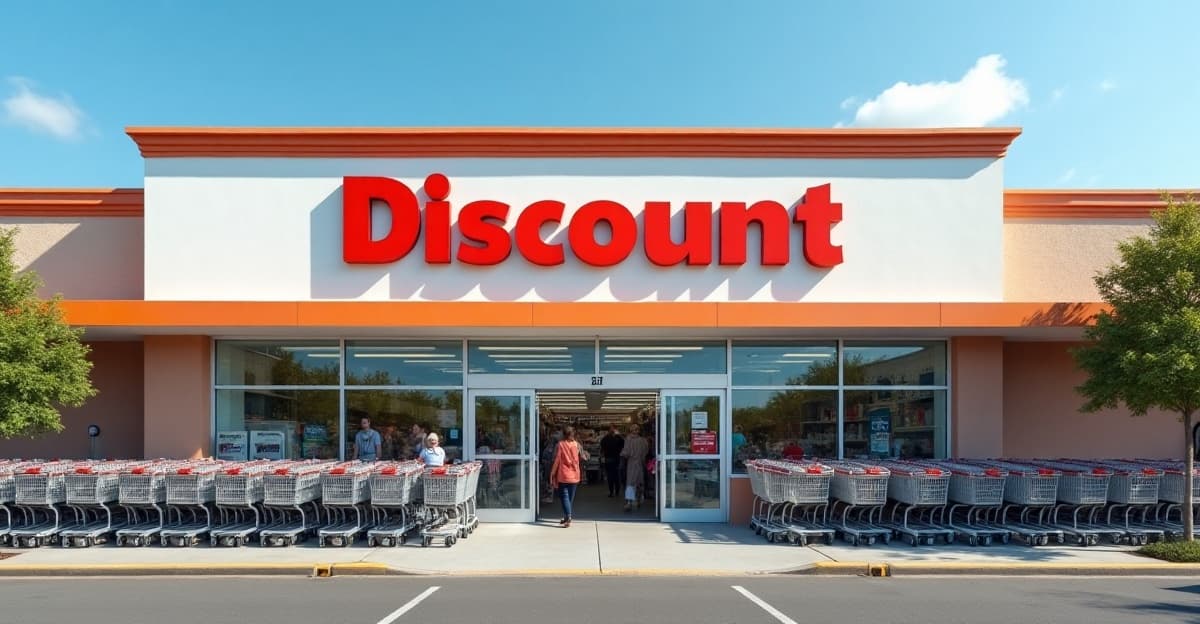
Discount Retailers Like Aldi Expand While Traditional Chains Close Thousands of Stores
This article was created with the help of artificial intelligence.
Key Takeaways
- In 2024, 7,327 retail stores closed nationwide in the US, an increase of 57.8 percent compared to 2023.
- For 2025, Coresight Research recorded 8,270 store closures against 5,270 new openings, representing a net loss of around 3,000 stores.
- Aldi opened 123 new supermarkets in 2024 and closed only 12 locations.
- S&P Global counted 717 major bankruptcy filings in the US in 2025, the highest level in fifteen years.
- Private equity firms were involved as owners in 71 percent of the largest bankruptcies in the US consumer goods sector at the time of filing.
- Off-price, discount, and grocery retailers filled vacant retail space partly at higher rents than their predecessors.
The American retail landscape is undergoing a profound transformation. While traditional retail chains go bankrupt and close thousands of stores, discount retailers like Aldi continue their aggressive expansion. The structural shift is redistributing market share and fundamentally changing the balance of power in grocery retail.
Divided Market: Store Closures and Expansions
In 2024, 7,327 retail stores closed nationwide in the US—an increase of 57.8 percent compared to 2023. Although the number of new openings grew by 8.2 percent, closures far outpaced openings. Discount chains, drugstores, and office supply retailers led the closure wave.
For 2025, Coresight Research recorded 8,270 store closures against 5,270 new openings, representing a net loss of around 3,000 stores. This figure was 45 percent below Coresight's original January 2025 forecast, which had predicted 15,000 closures. Five bankrupt brands—Rite Aid, Joann, Party City, Big Lots, and Forever 21—were responsible for more than half of the closed retail space. The ten largest chains together accounted for approximately 5,500 closures, roughly two-thirds of the total.
For 2026, Coresight Research forecasts approximately 7,900 store closures in the US.
Structural Drivers: E-Commerce and Changing Customer Flows
The ongoing shift toward online shopping makes it difficult for brick-and-mortar retailers to remain profitable. Fewer customers visit physical stores, and many retailers struggle to adapt their operations to this shift. Inflationary pressure and pandemic aftereffects continue to burden the industry.
2024 hit the discount and drugstore sector particularly hard. Macy's closed about 60 stores as part of a strategy to reduce operating costs and focus on high-performing locations. Drugstore chain Rite Aid filed for bankruptcy and closed multiple locations to cut costs. Walgreens also closed underperforming stores in response to declining customer traffic.
In the office supply sector, chains like Office Depot and Staples, which once dominated the segment, drastically reduced their physical presence. The increasing prevalence of remote work and the rise of e-commerce caused demand for physical office supply stores to shrink.
Bankruptcies Reach Fifteen-Year High
S&P Global counted 717 major bankruptcy filings in the US in 2025—the highest level in fifteen years. Most were repeat filings from companies that failed to restore stable supplier relationships within twelve to twenty-four months after their initial bankruptcy proceedings. Private equity firms were involved as owners in 71 percent of the largest bankruptcies in the US consumer goods sector at the time of filing.
The vacancy rate in American shopping centers was 5.7 percent in the fourth quarter of 2025, 40 basis points above the cyclical low of 5.3 percent. Simon Property Group, one of the largest operators of shopping centers and outlets, reported occupancy of 96.4 percent at the end of 2025.
Discount Chains as Crisis Winners
While much of retail shrinks, Aldi is betting on growth. The discount grocery chain opened 123 new supermarkets in 2024 and closed only 12 locations. This development stands in sharp contrast to overall market trends.
Discount retailers like Ollie's Bargain Outlet and Variety Wholesalers took over closed or closing Big Lots locations. Both chains managed to remain competitive while maintaining low prices. Off-price, discount, and grocery retailers filled vacant retail space partly at higher rents than their predecessors, pointing to rising demand for these formats.
Discount stores like Aldi and Dollar General continue to expand and fragment the share of consumer spending, while traditional supermarkets struggle with excess retail space. The dynamic between closures of traditional retail chains and openings in the discount and grocery sector shows a clear shift in consumer demand.
Pressure Also in the Discount Grocery Segment
However, the development is not uniformly positive for all discount grocery retailers. Best Bargains, a 54-year-old discount supermarket chain, entered Chapter 7 bankruptcy proceedings and is closing all locations. Grocery Outlet made a strategic pivot after 12 store closures: the company brought its store prices to Instacart to reach more customers. Over 90 percent of US customers now have access to at least one retailer offering products without an additional online markup.
Real Estate and Negotiation Dynamics
When a retailer seeks bankruptcy protection under Chapter 11, its lease agreements become assets that can be auctioned. This gives retailers some negotiating power against landlords, particularly given the number of chains that have exited the business.
The shift from traditional retailers to discount formats and grocery retailers is fundamentally changing the tenant structure in shopping centers. The fact that discount retailers are willing to pay higher rents than their failed predecessors signals both the strength of these business models and the adaptability of the real estate market.
Sources
- The Top US Retail Chain Closures & Bankruptcies of 2024
- The Great American Store Closure Tracker, 2026 Edition
- Discount grocery chain closing all stores as bargain grocers struggle - TheStreet
- After bankruptcy, liquidation retailer shares what’s next - TheStreet
- Discount grocery chain makes big changes after 42 store closures - TheStreet
- After Chapter 11 bankruptcy, liquidation discount retailer gets good news - TheStreet
- The Changing Retail Landscape — Regional Food Council of Central Illinois
- Retail Restructuring Trend: How Closures Are Reshaping U.S. Consumer Markets - CEO Weekly