Datacenter Backlash Reaches US Midterms: How Local Resistance to Data Centers Becomes National Politics
This article was created with the help of artificial intelligence.
Key Takeaways
- According to a survey from September 3, 2026, 75 percent of Americans oppose the construction of data centers in their local area, while only 15 percent support it.
- According to an NPR analysis, over $45 million has been spent on political ads mentioning data centers, with a significant portion of these funds coming from outside interest groups.
- An NBC News Decision Desk Poll from September 7, 2026 found that 69 percent of respondents oppose building AI data centers in their areas, with 45 percent strongly opposed.
- Within the Republican base, 39 percent oppose new data centers while only 31 percent support them, demonstrating a clear shift in sentiment.
- President Donald Trump continues to aggressively push the datacenter boom and framed communities opposing data centers in a loser's frame, creating a political dilemma for the Republican Party.
- In Georgia's gubernatorial race, over $12.8 million was spent on ads mentioning data centers, partly as a symbol of alleged corruption.
Resistance to data centers became a central campaign issue on September 8, 2026 in the US midterms, which are filling seats in the House of Representatives, one-third of the Senate, and gubernatorial positions in 36 states. According to a survey by Watson.ch from September 3, 75 percent of Americans oppose the construction of data centers in their local area, while only 15 percent favor it.
Cross-party rejection drives campaign spending higher
The issue unites voters from both sides in a deeply divided political environment. A YouGov survey shows that 51 percent of respondents view new data centers as bad for the country, with only one-fifth seeing them positively. Particularly noteworthy is the shift within the Republican base: 39 percent of Republican voters oppose new data centers, while only 31 percent support them. An NBC News Decision Desk Poll on September 7 found that 69 percent of respondents oppose building AI data centers in their areas, with 45 percent strongly opposed.
The political significance is reflected in campaign budgets: according to an NPR analysis, over $45 million has been spent on political ads mentioning data centers. A significant portion of these funds comes from outside interest groups. In Georgia's gubernatorial race alone, over $12.8 million flowed into advertising addressing data centers—partly as a symbol of alleged corruption.
Energy costs, noise, and property values as conflict lines
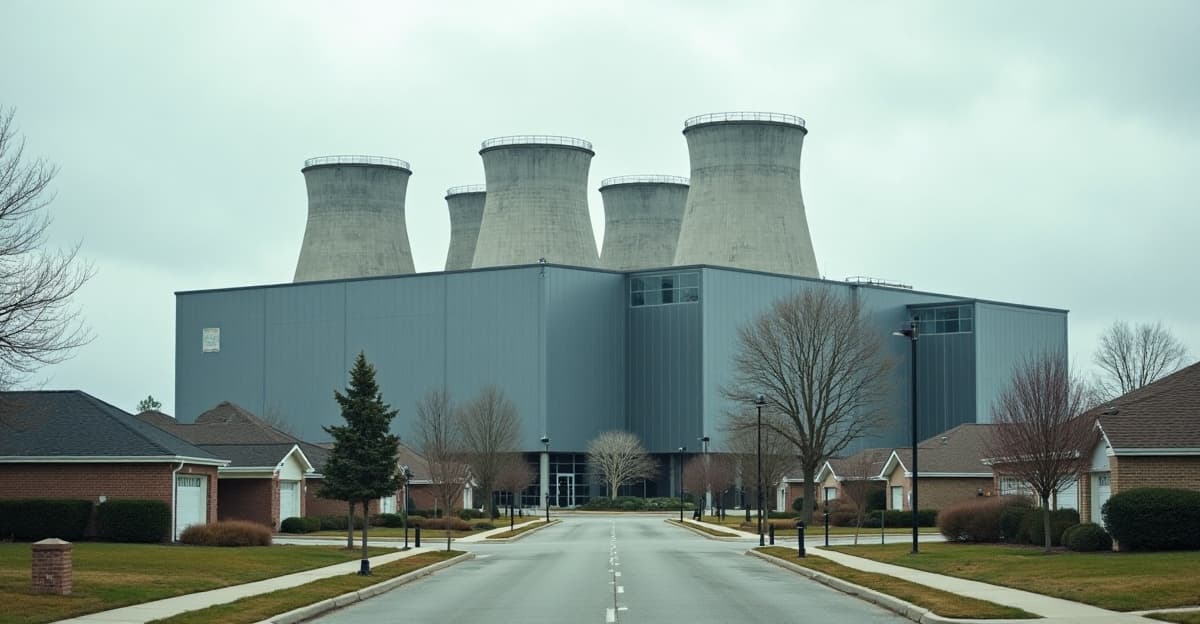
The facilities consume large amounts of cooling and drinking water as well as electricity, which directly affects household bills. A Reuters/Ipsos survey from June found that most Americans are concerned that data centers will drive up their electricity bills. Noise emissions from the round-the-clock humming server farms—sometimes from poorly insulated, bulky buildings—intensify rejection. Many Americans also fear that a data center in the neighborhood will reduce the value of their property.
Concern about rising energy costs is, according to Custom Mapping Poster, a core point of debate. Candidates from both parties promise to address this issue. The data center issue partly overshadows purchasing power—the number one concern for many Americans.
Candidates on both sides seek to stand out
In Wisconsin, Democratic gubernatorial candidate David Crowley must defend himself against campaigns attacking him as a data center fan. The Believe in Wisconsin PAC is promoting Crowley with the promise to lower energy costs and stop data centers to prevent them from raising electricity bills.
In Florida, Republican gubernatorial candidate Byron Donalds pledges to protect Florida families from data centers that raise electricity rates. In Ohio's Senate race, supporters of Democratic candidate Sherrod Brown accuse Republican Senator Jon Husted of being the face of data centers and driving up electricity bills. Politicians in key swing states like Pennsylvania, Michigan, and Ohio are distancing themselves from data center expansion in the face of growing public resistance.
Trump's pro-datacenter course divides Republican base
President Donald Trump is aggressively pushing the data center boom. In a post on his platform, Trump directly attacked opposition to data centers and framed communities turning against data centers in a loser's frame. Trump links the local anti-data-center movement to weakening US competitiveness.
This creates a political dilemma for the Republican Party immediately before the midterms. While expansion continues nationwide, the public debate around sites and their impact on daily life and the environment is shifting. A shift in sentiment within the Republican base is clearly evident—voters are increasingly viewing expansion as a burden rather than a location advantage. Watson.ch noted on September 3 that Trump is turning a deaf ear to growing resistance.
Governors under pressure, traditional party line crumbles
According to Darrell M. West of the Brookings Institution, governors are under pressure to slow construction of new data centers. This has led to a shift in the traditionally pro-business stance of the Republican Party, with incumbents and candidates recognizing the need to adapt to their voters' concerns.
Democratic senators such as Ron Wyden have explicitly called for excluding data centers from Opportunity Zone incentives, as they contribute little to supporting surrounding communities. This is relevant because Opportunity Zones—tax districts to promote disadvantaged regions—are increasingly being used for data center development because they are located near key resources such as good power sources.
Strategy for both parties: Environment against corporate power
Michael Franz, co-director of the Wesleyan Media Project, notes that data centers offer a unique opportunity for both sides to address their core concerns: Democrats can emphasize environmental issues, while Republicans can position themselves as opponents of big corporations and a system that ignores people's needs.
An expert told The Independent on September 8: "The moral of the story is that trying to bypass communities in developing these data centers doesn't work, and they're going to bring it to election day." The issue has gained traction in competitive states like Wisconsin and Michigan, with an increase in ad mentions as the election day approaches.
Sources
- KI-Datenzentren werden zur Kampfzone bei den US-Midterms
- Rechenzentren als KI-Zündstoff: Trumps Republikaner geraten kurz vor den Midterms unter Druck
- 2026 Midterms: Why Data Centers Are the New Political Battleground? (2026)
- Democrats seize on two GOP midterm vulnerabilities: Data centers and the ‘big beautiful bill’ - POLITICO
- Communities nationwide are fighting furiously against data centers. The companies behind them are turning to politics | The Independent
- Rising data center backlash shakes up midterm races
- As Trump pushes for data centers, voters in key midterm races say they don’t want them