Wall Street Demands Results: Tech Giants Must Justify AI Investments
This article was created with the help of artificial intelligence.
Key Takeaways
- The six largest tech companies invested a combined 110.2 billion US dollars in infrastructure in 2023, an increase of 6 billion compared to the previous year.
- Microsoft invested 37.5 billion dollars in capital expenditures in its most recent quarter, representing an increase of approximately 65 percent year-over-year.
- All Magnificent Seven stocks have fallen following their recent quarterly reports, even though the numbers in some cases exceeded expectations.
- Investors are demanding measurable returns from AI investments and are increasingly scrutinizing the relationship between revenue growth and capital expenditures.
- Microsoft invested approximately half of its capital expenditures in short-lived assets such as graphics processing units and central processing units for AI data centers.
The Magnificent Seven are under pressure: After years of explosive investments in artificial intelligence, Wall Street is now demanding results. According to Bloomberg Intelligence, the six largest tech companies – Amazon, Microsoft, Alphabet, Meta Platforms, Apple and Oracle – invested a combined 110.2 billion US dollars in infrastructure in 2023, up from 104.2 billion in 2022. Yet as spending rises, investor skepticism grows.
Microsoft with massive investment push
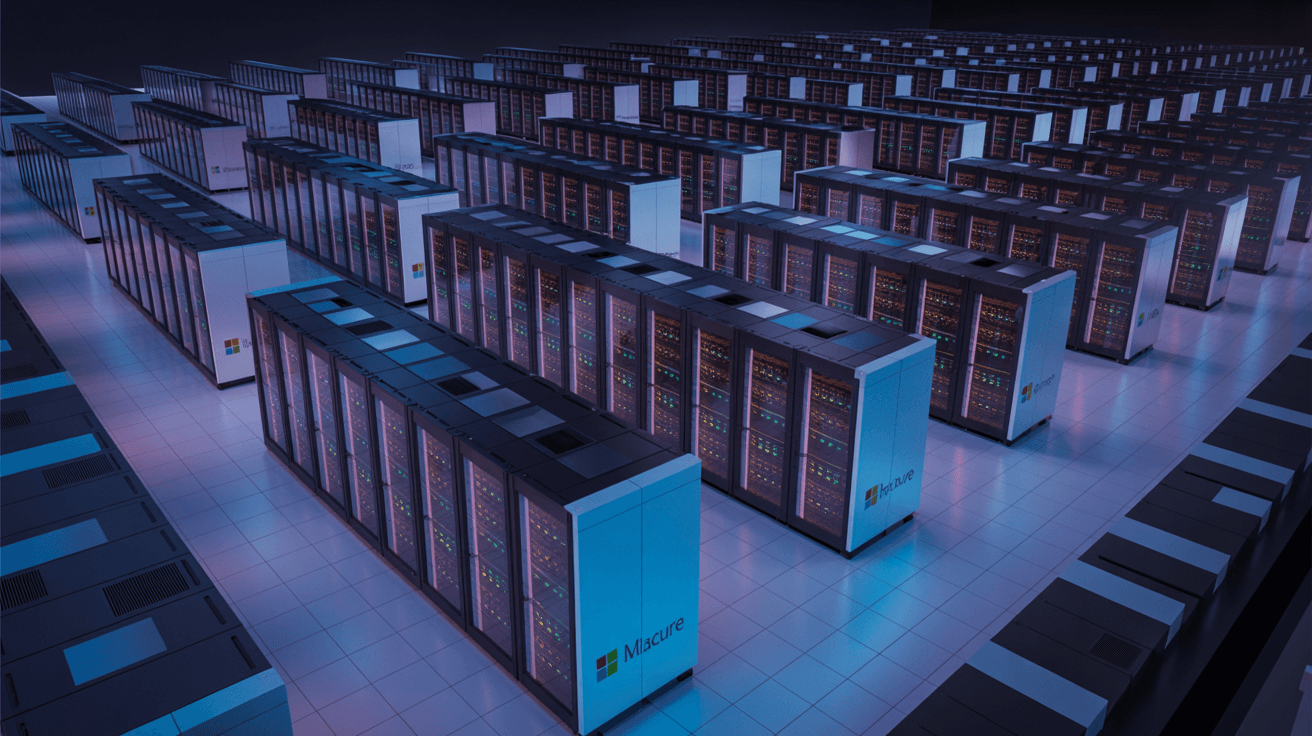
Microsoft has accelerated the pace particularly sharply. In its most recent quarter (Q2 of fiscal year 2026), the Redmond-based company recorded capital expenditures of 37.5 billion dollars – an increase of around 65 percent year-over-year. About half of this sum went into short-lived assets, primarily graphics processing units (GPUs) and central processing units (CPUs), as the company disclosed in its earnings call. This hardware is intended to support growing demand for Azure cloud services, proprietary AI applications, and accelerated research and development.
Capital expenditures – also called CapEx – refer to funds that companies use for long-term assets such as buildings, equipment, or technology. The goal: long-term efficiency gains. For tech giants right now, it's all about AI data centers and the infrastructure needed for them.
Mood shift in the markets
Striking is the market reaction: All Magnificent Seven stocks have fallen following their recent quarterly reports – even when the numbers beat expectations. This collective disappointment signals a fundamental shift in sentiment. Investors are no longer focused solely on revenue growth, but are critically examining how capital-intensive this growth is.
Jed Ellerbroek, portfolio manager at Argent Capital Management, puts it bluntly: Companies must accelerate their revenues to justify the enormous investments. The AI promise alone is no longer enough – measurable returns on the billions invested are what's needed.
What does this mean for investors?
The focus is shifting from AI vision to returns. Investors should now pay increased attention to the following metrics for tech stocks:
- Revenue growth relative to capital expenditures
- Operating margins that show whether infrastructure investments are paying off
- Concrete monetization strategies for AI products
For the second quarter of 2026, the bar is set high. The tech giants must prove that their massive investments in AI infrastructure are not only technologically sound but also economically viable. Those who present convincing numbers are likely to be rewarded in the markets – all others could face further price corrections.