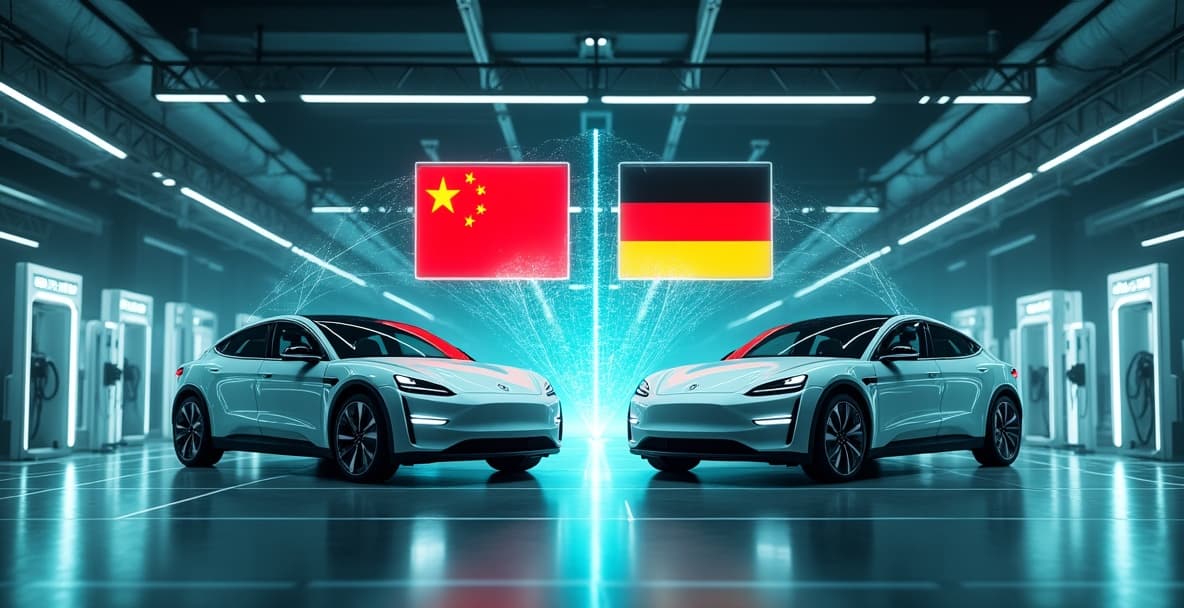
Volkswagen and Xpeng Deal: What the China Partnership Means for VW Shareholders
This article was created with the help of artificial intelligence.
Key Takeaways
- Volkswagen acquired a 4.99 percent stake in Xpeng for $705.6 million in July 2023
- The cooperation reduces development times by up to 30 percent and cuts costs in some areas by half
- First jointly developed VW electric models for China come to market in 2026
- Volkswagen and Xpeng share 20,000 charging points in China
- Xpeng expects sales decline in the first quarter of 2026 following cuts to Chinese EV subsidies
- Volkswagen plans more than 20 new New Energy Vehicle models for the Chinese market in 2026
Volkswagen is betting on a strategic alliance with a local technology partner in the world's most important automotive market. The cooperation with Chinese electric vehicle manufacturer Xpeng is intended to make the German group more competitive in China – a market where VW is increasingly under pressure. For shareholders, the question arises whether the investment and collaboration will bring the hoped-for strategic turnaround.
Key Points on the Volkswagen-Xpeng Cooperation
- Volkswagen acquired a 4.99 percent stake in Xpeng for $705.6 million in July 2023
- The cooperation reduces development times by up to 30 percent and cuts costs in some areas by half
- First jointly developed VW electric models for China come to market in 2026
- Volkswagen and Xpeng share 20,000 charging points in China
- Xpeng expects sales decline in the first quarter of 2026 following cuts to Chinese EV subsidies
- Volkswagen plans more than 20 new New Energy Vehicle models for the Chinese market in 2026
The Partnership Cornerstones
In July 2023, Volkswagen invested a total of $705.6 million (approximately €654.5 million) in Xpeng and secured a 4.99 percent stake in the Chinese electric vehicle manufacturer. According to Xpeng's announcement, VW received a seat as a non-voting observer on the company's board in return. The actual purchase price was thus slightly above the originally communicated $700 million.
The collaboration focuses on the joint development of electric vehicles for the Chinese market, which will be sold under the Volkswagen brand. Specifically, both partners plan to develop at least two new battery-powered VW models. The first of these vehicles will come to market in 2026, with additional models following throughout the year. Overall, the Volkswagen Group plans to introduce more than 20 new NEV models (New Energy Vehicles – a collective term for battery electric cars, plug-in hybrids and fuel cell vehicles) in China in 2026.
Efficiency Gains as the Central Lever
The cooperation promises significant operational advantages. According to Finanzmarktwelt, development times will fall by up to 30 percent, while costs in some areas can be reduced by as much as half. These efficiency gains are crucial for Volkswagen to keep pace with local manufacturers like BYD, Nio and Xpeng on the Chinese market, which bring new models to market much faster.
A test center was completed in late 2025 to support the joint development work. A further laboratory is scheduled to be added in mid-2026, capable of simulating extreme environmental conditions. This infrastructure makes it possible to test vehicles under realistic Chinese conditions – from extreme cold in the northeast to tropical heat in the south of the country.
Charging Infrastructure as a Competitive Advantage
Another component of the cooperation concerns charging infrastructure. According to DER AKTIONÄR, Volkswagen and Xpeng agreed to jointly use a total of 20,000 charging points. This cooperation improves the availability of charging technology for customers of both brands and strengthens VW's position against competitors that have less comprehensive charging solutions.
In China, where charging infrastructure is increasingly considered a differentiating feature, this access gives Volkswagen a tangible advantage. Local manufacturers have invested heavily in their own charging networks over recent years – Tesla with its Superchargers, but also Chinese brands like Nio with their battery-swapping stations.
Challenges and Risks for Shareholders
Despite strategic progress, the cooperation faces significant challenges. In March 2026, Xpeng reported, according to Reuters, that the company expects a sales decline in the first quarter of 2026 following cuts to electric vehicle subsidies in China. This development affects not only Xpeng itself, but also the models jointly developed with Volkswagen, which will be launched in a more challenging market environment.
For VW shareholders, the central question remains whether the cooperation will bring the desired turnaround in China. In recent years, Volkswagen has continuously lost market share to local competitors who have been much faster in electrification and software integration. The partnership with Xpeng is intended to close this gap by giving VW access to modern EV technology and software solutions.
Integration and Timeline as Critical Factors
According to Finanztrends, investors will pay particular attention in the coming months to whether the integration of Xpeng's software at Volkswagen proceeds smoothly and whether ambitious sales targets can be achieved. The track record of joint ventures and collaborations in the automotive sector shows that cultural differences and technical challenges are often underestimated.
With the start of construction on new manufacturing facilities and the planned market introduction of the first jointly developed models in 2026, the cooperation has laid out an ambitious timeline. The coming months will show whether Volkswagen and Xpeng can meet this schedule and whether the promised efficiency gains are actually realized.
Assessment for VW Shareholders
The Xpeng cooperation is part of a broader strategy by Volkswagen to not only operate in China through traditional joint ventures with SAIC and FAW, but also to enter into direct technology partnerships. The investment of around $700 million appears manageable for a group of Volkswagen's size, which invests tens of billions of euros annually.
What matters less is the financial stake of just under five percent than access to technology and know-how. Xpeng is regarded as one of the most technologically advanced Chinese electric vehicle manufacturers, particularly in autonomous driving functions and software architecture. For Volkswagen, the partnership offers the opportunity to integrate these technologies faster than through independent development.
At the same time, the cooperation carries risks. Dependence on a partner that itself is under margin pressure and expects sales declines could prove problematic. Furthermore, it remains unclear how VW's traditional Chinese joint venture partners will react to the new alliance and whether conflicts may arise over product strategy.
For shareholders, 2026 is a decisive year. The introduction of the first jointly developed models will show whether Volkswagen can keep pace with local competitors with this strategy or whether further strategic adjustments are needed.
Sources
- VW ist jetzt Investor bei Xpeng - electrive.net
- Volkswagen: 2026 entscheidet über Zukunft von VW in China - Finanzmarktwelt
- Volkswagen-Partner Xpeng rechnet mit Absatzeinbruch - Aktie fällt - onvista
- Volkswagen und Xpeng: Das Bündnis rückt noch stärker zusammen - DER AKTIONÄR
- XPeng-Aktie: Deal mit VW! - Finanztrends