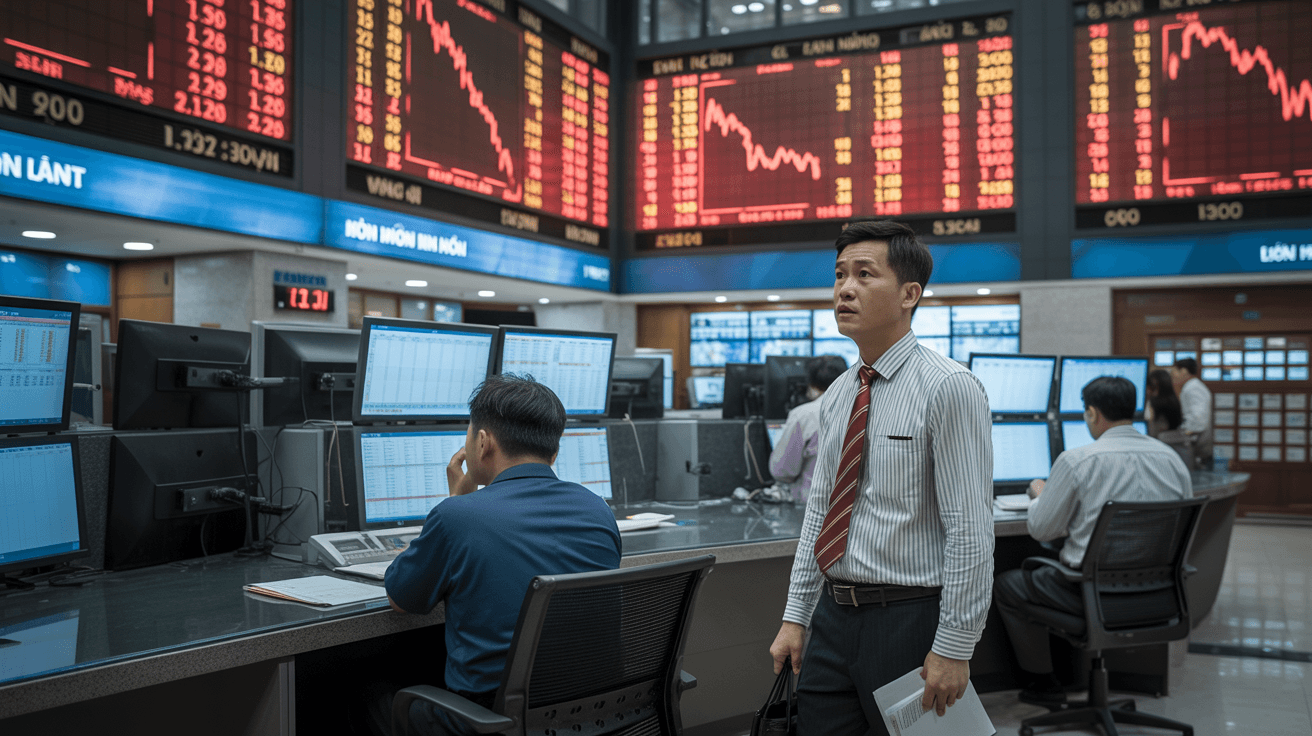
Vietnam Plans Stock Market Support Measures Due to Iran Crisis
This article was created with the help of artificial intelligence.
Key Takeaways
- Vietnam's leading index fell 6.5% on March 9, 2026, and posted a 9.3% decline for the entire month of March
- The Ministry of Public Security presented a package of stabilization measures on March 17, 2026, including a state-guaranteed stabilization fund
- Vietnam sources most of its oil from the Gulf region, making the country particularly vulnerable to the Iran crisis
- A correction of 12% in the first six trading days of March made Vietnam one of Asia's weakest stock markets
- The Prime Minister's office instructed the Finance Ministry and central bank on March 25 to take action based on the recommendations
Vietnam's Ministry of Public Security presented Prime Minister Pham Minh Chinh with a comprehensive package of measures to stabilize the collapsed stock market on March 17, 2026. The core of the proposals is the establishment of a state-guaranteed stabilization fund, after the leading index fell 9.3% in March as a result of the Iran conflict turmoil.
Dramatic Collapse in March
The Vietnamese stock market came under significant selling pressure in March. On March 9, the leading index plummeted 6.5% – one of the heaviest single-day losses in years. In the first six trading days of the month, the correction already accumulated to 12%. Over the entire month of March, the index lost 9.3%, making it one of Asia's weakest stock markets.
The turbulence was triggered by escalating tensions around the Iran conflict and the associated economic uncertainties. Particularly, concerns about fuel shortages are weighing on the sentiment of Vietnamese investors, as the country sources most of its oil from the Gulf region. An interruption of supply chains due to the conflict would have direct impacts on the Vietnamese economy.
Comprehensive Package of Measures
The Ministry of Public Security characterized the sharp market decline as an "excessively negative investor reaction that requires a market restructuring". According to documents reviewed by Reuters, the proposed support measures include:
- Establishment of a state-guaranteed stabilization fund as the central measure for direct market intervention
- Incentives for share buybacks by listed companies to stabilize prices
- Limitation of daily trading ranges to reduce volatility
- Deployment of influencers to spread positive messages and targeted market influence
On March 25, the Prime Minister's office instructed the Ministry of Finance and the Vietnamese central bank to take action based on these recommendations. The concrete scope of implementation remained unclear at first. Neither the Finance Ministry nor the central bank or other affected government institutions provided immediate statements on the planned measures.
Unusual Role of the Security Ministry
The leading role of the Ministry of Public Security in developing stock market support measures is unusual. Typically, such economic policy initiatives fall within the purview of the Finance Ministry or the central bank. The engagement of the Security Ministry points to the high political priority the government assigns to market stabilization.
Recovery Potential After Sharp Correction
The drastic correction of 12% in the first six trading days of March could, according to Vietnamese market observers, lay the ground for a possible recovery. The sharp downward movement opens attractive buying opportunities ahead of the earnings season for the first quarter of 2026, according to local market analyses.
Whether the announced support measures will be sufficient to sustainably restore investor confidence is likely to depend significantly on the further development of the Iran crisis. As long as uncertainty over oil supplies from the Gulf region persists, the Vietnamese stock market remains vulnerable to further volatility.
Context: Vietnam's Dependence on the Middle East
The particular vulnerability of the Vietnamese market is explained by the country's structural dependence on oil imports from the Gulf region. Unlike other Southeast Asian states, Vietnam has only limited domestic oil production capacity and is therefore heavily reliant on imports. A prolonged interruption of supply routes due to military conflict in the Persian Gulf would further strain the already tight energy supply situation.
The stock market turbulence comes at an inopportune time: Vietnam had only recently intensified efforts to attract foreign investors and reform its capital markets. A sustained loss of confidence could set back these efforts.