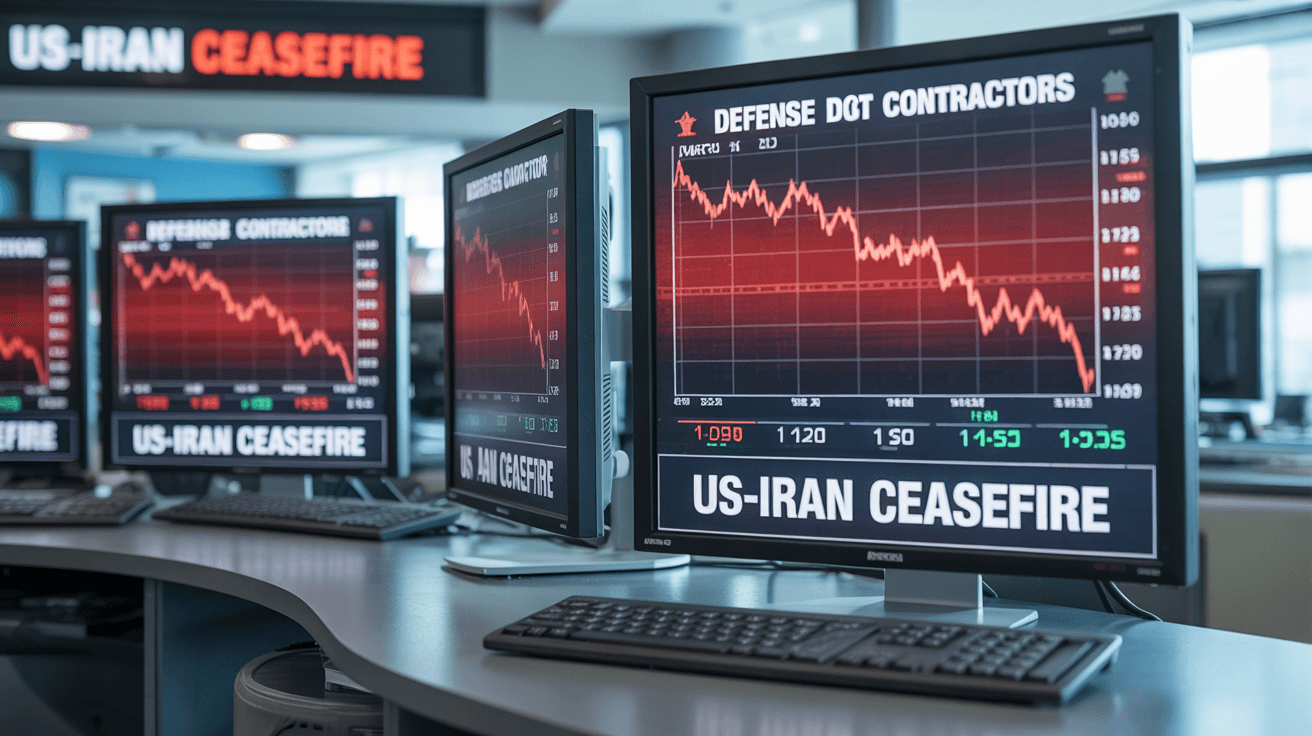
US-Iran Ceasefire: Which Defense Stocks Come Under Pressure
This article was created with the help of artificial intelligence.
On April 7, 2026, the US and Iran agreed on a 14-day ceasefire that came into effect on April 8 – a development that triggered price jumps across global stock exchanges, while defense stocks came under pressure.
The agreement was brokered by Pakistani Prime Minister Shehbaz Sharif, who urged US President Donald Trump shortly before the close of trading in New York to extend the deadline for reopening the Strait of Hormus. This waterway, which was blocked during the 40-day conflict phase and removed approximately 400 million barrels of oil from the market, is one of the world's most important global transport routes for energy commodities.
Broad stock market rally weighs on defense stocks
The ceasefire triggered a global equities rally on April 8: The DAX jumped at the start of trading by 4.8 percent to 24,022 points (+1,100 points), Japan's Nikkei index gained 5 percent, and South Korea's Kospi rose 6 percent – which led to a trading halt. In the US, the S&P 500 rose 0.63 percent to 6,616 points and the Nasdaq rose 0.1 percent to 22,017 points.
Asian markets reacted particularly strongly to the easing of tensions, as the region is heavily dependent on oil imports from the Middle East. The reopening of the Strait of Hormus means falling transport costs and improved supply chains for numerous industries – a clear contrast to the situation in the defense industry.
Which defense stocks are affected
The Iran war, which began on February 28, 2026 with joint attacks by Israel and the US, had previously driven a boom in defense stocks. According to industry reports, the main beneficiaries were US companies RTX, Lockheed Martin, and Northrop Grumman, which received orders from attacked Gulf states to replenish their air defense missile stockpiles.
The US Department of Defense recently requested an additional $200 billion (approximately €173 billion) for the Iran war – an unprecedented budget that could now be called into question by the ceasefire. A lasting de-escalation would dampen the order backlog for these companies in the medium term.
Conflict background: From military strike to ceasefire
The conflict began with targeted strikes on senior Iranian government officials and military facilities, including Supreme Leader Ali Khamenei, who was killed in an air strike. Iran responded with retaliatory strikes on US military installations in at least nine countries, including Qatar, Bahrain, the United Arab Emirates, Iraq, Jordan, and Kuwait. A British military base in Cyprus was also attacked by Iranian drones.
The 40-day escalation led to a complete blockade of the Strait of Hormus and a massive increase in oil prices, before a diplomatic solution was found.
Uncertainty remains despite ceasefire
The 14-day ceasefire offers only a temporary easing of tensions for now. Whether this develops into a lasting solution or the conflict reignites after the deadline expires remains open. For investors, this means a period of heightened volatility: while defensive sectors and energy-intensive industries benefit from the easing, defense stocks remain under scrutiny.
The coming two weeks should show whether diplomatic efforts bear fruit or whether this is merely a tactical pause in the conflict. The markets have made their preference clear: peace is rewarded, war preparation is punished for now.