Trump Threatens 50% Tariffs: Which Countries and Stocks Are Affected
This article was created with the help of artificial intelligence.
The trade conflict between the USA and its major economic partners is escalating: US President Donald Trump announced in early April that starting June 1, he will impose 50 percent tariffs on imports from nearly 70 countries. The measure targets the European Union, Japan, Brazil, and other major US trading partners. Already on the so-called "Liberation Day," Trump imposed import duties against a total of 185 countries.
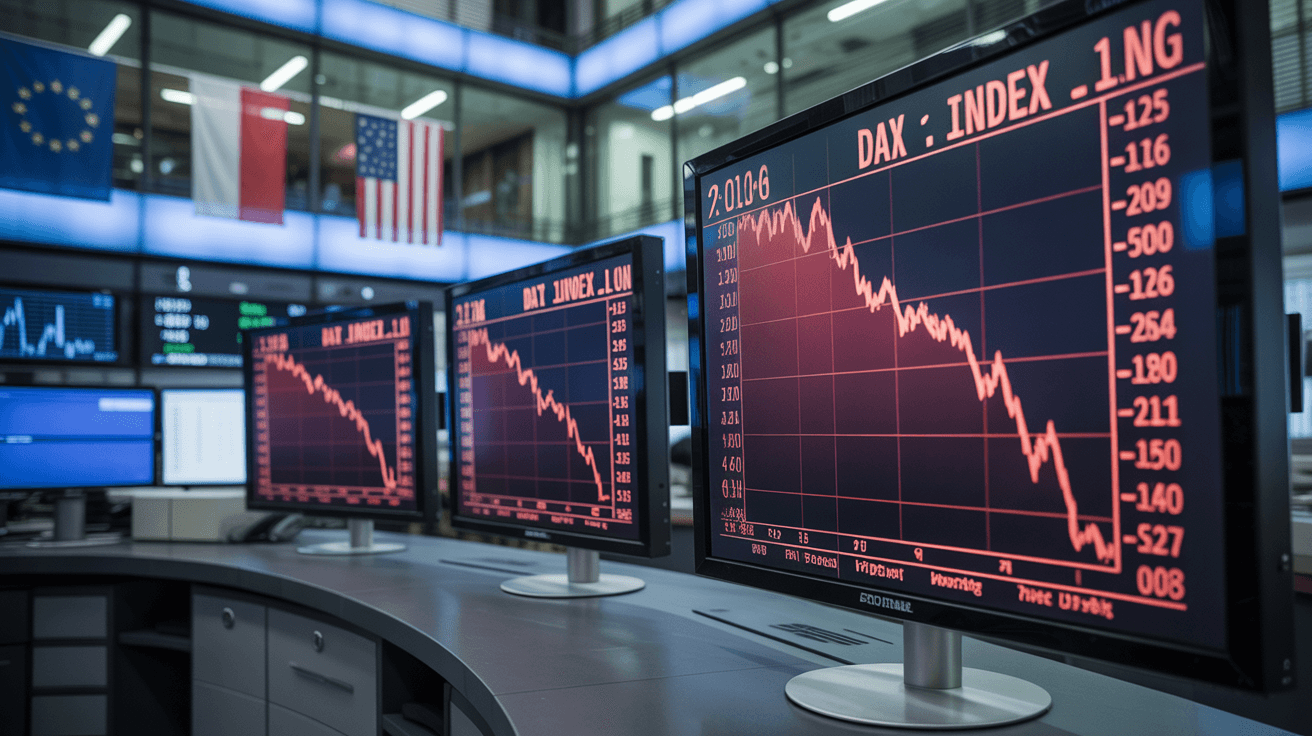
For investors in the DACH region (Germany, Austria, Switzerland), the situation is becoming more challenging: The DAX came under severe pressure in recent weeks and lost 17 percent in value within a short time. On a single trading day, the German benchmark index fell intraday by 10 percent, according to data from justTRADE. Volatility in the stock markets has increased significantly – a direct result of the uncertainty triggered by Trump.
Key Takeaways: The Most Important Facts About the Tariffs
- Trump announced tariffs of 50 percent starting June 1, 2026, for nearly 70 countries, including the EU, Japan, and Brazil
- The EU Commission negotiated a ceiling of 15 percent for the majority of EU exports in sectors such as automobiles, semiconductors, and pharmaceuticals
- The DAX lost 17 percent within a few weeks following the tariff announcements; on a single trading day, the index fell intraday by 10 percent
- Steel, aluminum, and copper are subject to 50 percent tariffs without exceptions – to protect US producers
- Brazil has paid 50 percent tariffs since August 6, but with exceptions for pig iron, precious metals, energy, and fertilizers
- Countries supplying weapons to Iran also face 50 percent tariff threats
Which Countries Are Affected by the 50 Percent Tariffs?
The list published by the White House last week covers tariff rates for nearly 70 countries. The European Union, Japan, and other central US trading partners are particularly in focus. For individual countries, different rules apply: Brazil has been subject to 50 percent tariffs since August 6, with many goods exempted – including pig iron, precious metals, energy, and fertilizers.
On April 8, Trump also threatened countries supplying weapons to Iran with 50 percent tariffs. This geopolitically motivated measure expands the circle of affected states beyond pure trade aspects.
EU Negotiations Bring Partial Relief
The European Commission achieved a reduction in negotiations with Trump: For the vast majority of EU exports to the USA, a ceiling of 15 percent will now apply. This regulation covers most sectors, including automobiles, semiconductors, and pharmaceuticals. Trump withdrew potential tariffs against Germany and other European countries.
In some cases, the tariff structure has been adjusted: A uniform rate of 25 percent (instead of 50 percent) is to be applied to the total value of certain goods, rather than previously only to the metal content, as economiesuisse reports.
Which Sectors and Industries Are Hardest Hit?
The tariffs are particularly drastic for raw materials: Steel, aluminum, and copper are subject to 50 percent duties without exceptions. This measure is intended to create an "insurmountable moat" for US producers, according to White House documents. For European steel manufacturers and metal processing companies, this means massive competitive disadvantages in the US market.
The following sectors are directly affected by potential US tariffs:
- Automotive: German premium manufacturers export significant volumes to the USA – tariff burden is likely to reduce margins and competitiveness
- Machinery: Mid-sized companies and corporations supplying industrial goods to the USA must expect higher costs
- Chemicals: Chemical producers in the DACH region export specialty chemicals and raw materials – both segments are affected
- Technology: US corporation Apple also came into Trump's sights, as reported by Tagesschau – a sign that protectionist measures can also hit domestic companies
Which Stocks and Indices Are Under Pressure?
The German stock index DAX has already reacted sharply to tariff threats in recent weeks. The loss of 17 percent within a short time ranks among the strongest declines in recent years. Volatility has increased noticeably – investors are pricing in uncertainty about future trading conditions.
DAX Companies in Focus
Companies with high USA exposure are particularly affected. Automakers such as BMW, Mercedes-Benz, and Volkswagen supply significant portions of their production to the USA or manufacture locally. Higher tariffs on imported components or finished vehicles burden profitability. Machinery manufacturers such as Siemens or machine and equipment builders with US operations also face rising costs.
Chemical companies such as BASF and Covestro export products to the USA – tariff-related price increases are likely to weaken their competitive position against local suppliers. Steel manufacturers in the broader European region that rely on the US market face significant challenges.
Swiss SMI and Austrian Companies
The Swiss SMI is also likely to be affected. Pharmaceutical companies such as Roche and Novartis benefit from the EU regulation with a 15 percent ceiling, but general uncertainty also burdens Swiss equities. Austrian industrial companies with US operations – such as those from machinery or steel processing – must also expect higher costs.
Economic Consequences: What Do the Tariffs Mean Long-Term?
The economic balance of protectionist measures is sobering according to analyses. Cash Online reports significant consequences for inflation, growth, and societal distribution. Higher tariffs increase the cost of imported goods, which directly affects consumer prices. Companies often pass on cost increases to end customers – inflation rises.
For investors in the DACH region, this means: Short-term volatility is likely to remain high as long as no final agreement is reached between the USA and its trading partners. In the long term, companies could adjust supply chains, relocate production, or lose market share – depending on how tariff policy develops.
Assessment for Investors: What to Pay Attention to Now?
The announced tariffs represent a significant burden for export-oriented companies. Investors should examine the USA exposure of individual positions: How high is the revenue share in the USA? Which products are affected? Are there alternative options?
EU negotiations show that diplomatic solutions are possible. The reduction from 50 to 15 percent for many sectors reduces the immediate burden. However, the risk of further escalation remains – particularly if Trump makes good on his threats against additional countries.
Diversification remains a central principle: Portfolios that rely heavily on DAX stocks with high USA dependence are likely to remain more volatile in the short term. Regional diversification and balanced sector allocation can help mitigate tariff-related risks.
The coming weeks will show whether additional countries can negotiate exemptions or whether Trump will actually enforce the announced 50 percent tariffs starting June 1. Until then, uncertainty in markets is likely to remain high.
Sources
- Trump droht EU mit Zöllen in Höhe von 50 Prozent ab dem 1. Juni
- Hohe US-Zölle für knapp 70 Staaten in Kraft getreten
- Trump und der DAX: Wie schwer trifft die Zoll-Krise deutsche Aktien
- Trumps Zollpolitik: Ein Jahr später überwiegen die wirtschaftlichen Schäden
- Trump Ticker – Handelspolitik und Folgen für die Schweiz
- Trump: 50-Prozent-Zölle für Irans Waffenlieferanten