Swiss Stock Market 2026: Opportunities and Risks
This article was created with the help of artificial intelligence.
Key Takeaways
- The federal government's expert group on economic forecasts lowered its growth forecast for 2026 to 1.0% (December 2025: 1.1%), with 1.7% expected for 2027
- Annual inflation is expected to rise from 0.2% to 0.5% in 2026, with imported deflation set to end without further Swiss franc appreciation
- Experts anticipate a further rate cut in 2026, which should generally benefit bonds
- Bachem is sticking to its 2026 forecast according to Basler Kantonalbank, showing no negative operating impact from Novo Nordisk
- Titlis Bergbahnen is trading at 55 francs in early 2026, its highest level in four and a half years
Key Findings
- The federal government's expert group on economic forecasts lowered its growth forecast for 2026 to 1.0% (December 2025: 1.1%), with 1.7% expected for 2027
- Annual inflation is expected to rise from 0.2% to 0.5% in 2026, with imported deflation set to end without further Swiss franc appreciation
- Experts anticipate a further rate cut in 2026, which should generally benefit bonds
- Bachem is sticking to its 2026 forecast according to Basler Kantonalbank, showing no negative operating impact from Novo Nordisk
- Titlis Bergbahnen is trading at 55 francs in early 2026, its highest level in four and a half years
Swiss Economy Growing Below Average
The federal government's expert group on economic forecasts (SECO) slightly revised down its growth forecast for the Swiss economy in early 2026. For the full year 2026, experts expect real GDP growth of 1.0% – down from 1.1% in the December 2025 forecast. The KOF Institute reaches a similar conclusion, also expecting below-average growth of 1.0%. Only in 2027 should the Swiss economy gain momentum again, growing by 1.7%.
According to Raiffeisen, the economic environment remains subdued in 2026: the Swiss economy is not taking off. The dampened economic outlook is also reflected in the performance of individual sectors, which are performing significantly weaker than the leading indices.
Inflation and Monetary Policy in Focus
A trend reversal is emerging in price levels. Annual inflation is expected to rise from 0.2% to 0.5% in 2026, according to the forecasts. Without another appreciation of the Swiss franc, imported deflation – a phenomenon that characterized Switzerland in previous years – should end in the current year.
On the monetary policy front, analysts expect a continuation of the interest rate cutting cycle. Monetary policy analysts surveyed by the European Central Bank (ECB) did not expect the ECB to raise its key rate in the foreseeable future ahead of the ECB Governing Council meeting on 18/19 March 2026. Experts consider a further rate cut in 2026 as the most likely scenario, which should generally benefit bonds – even if risks and interim losses remain possible.
Stock Market Shows Mixed Performance
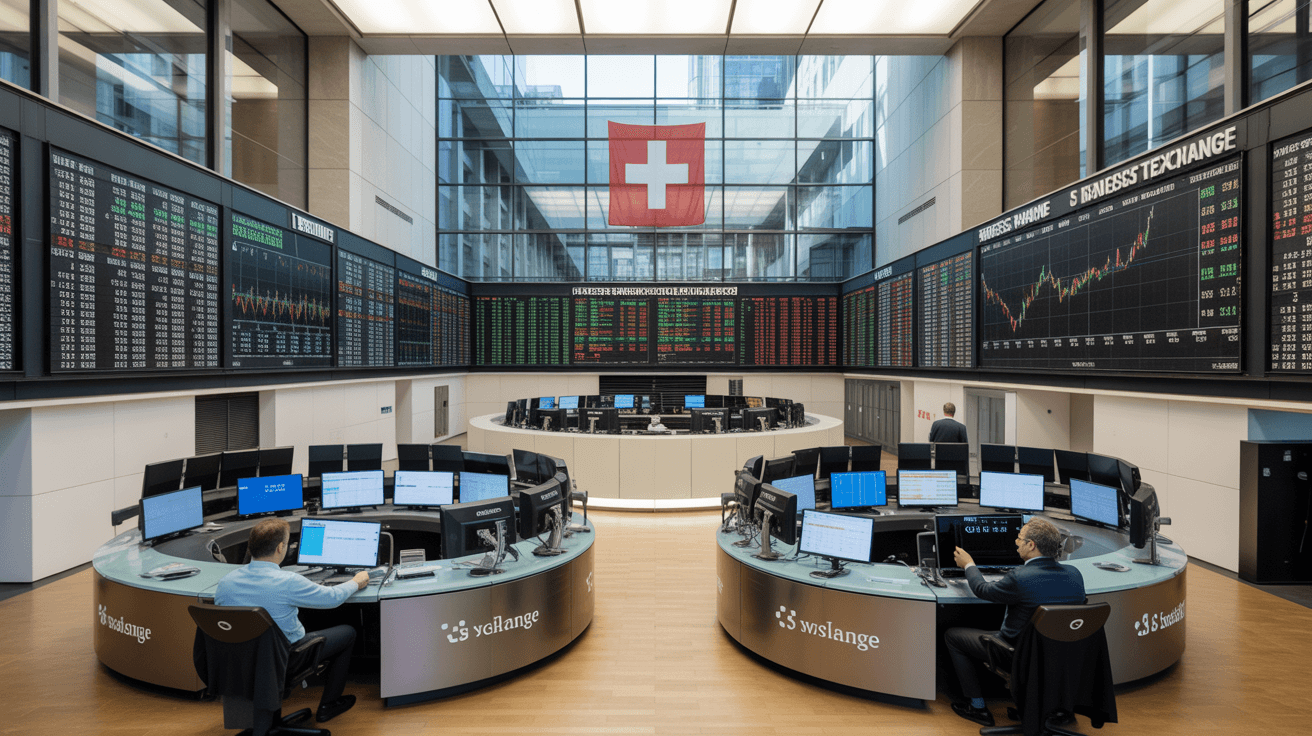
The Swiss stock exchange presents an unusual situation in April 2026. While the leading indices are moving near their highs, individual sectors are showing deep red figures. This discrepancy highlights the selective development on the Swiss stock market: not all sectors benefit equally from the current environment.
In principle, stocks offer attractive long-term return opportunities but exhibit higher price fluctuations than bonds. This volatility is particularly pronounced in 2026 in individual sectors, while broadly-based indices perform significantly more stably.
Individual Stocks with Potential
Bachem: Attractive Entry Point
Basler Kantonalbank rates Bachem as an attractive entry candidate. When presenting its 2025 results in early March 2026, the company stuck to its previous forecast for 2026. This shows no negative operating impact at least from a Novo Nordisk announcement. Basler Kantonalbank therefore considers the timing for entry even more attractive than before.
BKW: Energy Company Focused on Germany and Switzerland
Swiss energy company BKW focuses on the production, transport, trading and sale of energy as well as energy solutions. The company is active in both Switzerland and Germany and benefits from sustained demand for infrastructure investments in the energy sector.
Titlis Bergbahnen: Recovery After Difficult Years
After four years of declining prices, Titlis Bergbahnen shares made significant gains in 2025. In early 2026, the stock is trading at 55 francs – as high as it has been in four and a half years. The recovery in the tourism sector and the so-called "Titlis Project" are likely to have contributed to this development.
Outlook for Investors
The environment for Swiss stocks remains challenging in 2026. Below-average economic growth of 1.0% dampens earnings expectations for many companies. At the same time, falling interest rates and moderate inflation provide a fundamentally stable environment for riskier investments.
Investors should pay attention to pronounced sector divergence: while the leading indices are trading near their highs, individual sectors are recording significant losses. Selective stock selection is therefore likely to be more important than broad market exposure. The individual stocks mentioned – Bachem, BKW and Titlis Bergbahnen – show that opportunities exist even in a subdued market environment.
For 2027, both SECO and KOF expect a significant acceleration in economic growth to 1.7%. This outlook could already provide support for share price performance in 2026, provided macroeconomic conditions do not deteriorate.
Sources
- Konjunkturprognosen - SECO
- Ausblick 2026: Schweizer Wirtschaft hebt nicht ab - Raiffeisen
- Unsere Schweizer Aktienfavoriten 2026 - Basler Kantonalbank
- Ausblick 2026: Was Anleger wissen müssen - AXA IM
- Schweizer Aktien Favoriten 2026 - schweizeraktien.net
- Anlageausblick 2026 - Zürcher Kantonalbank
- Börsen-Kurse und Finanznachrichten für die Schweiz - finanzen.ch