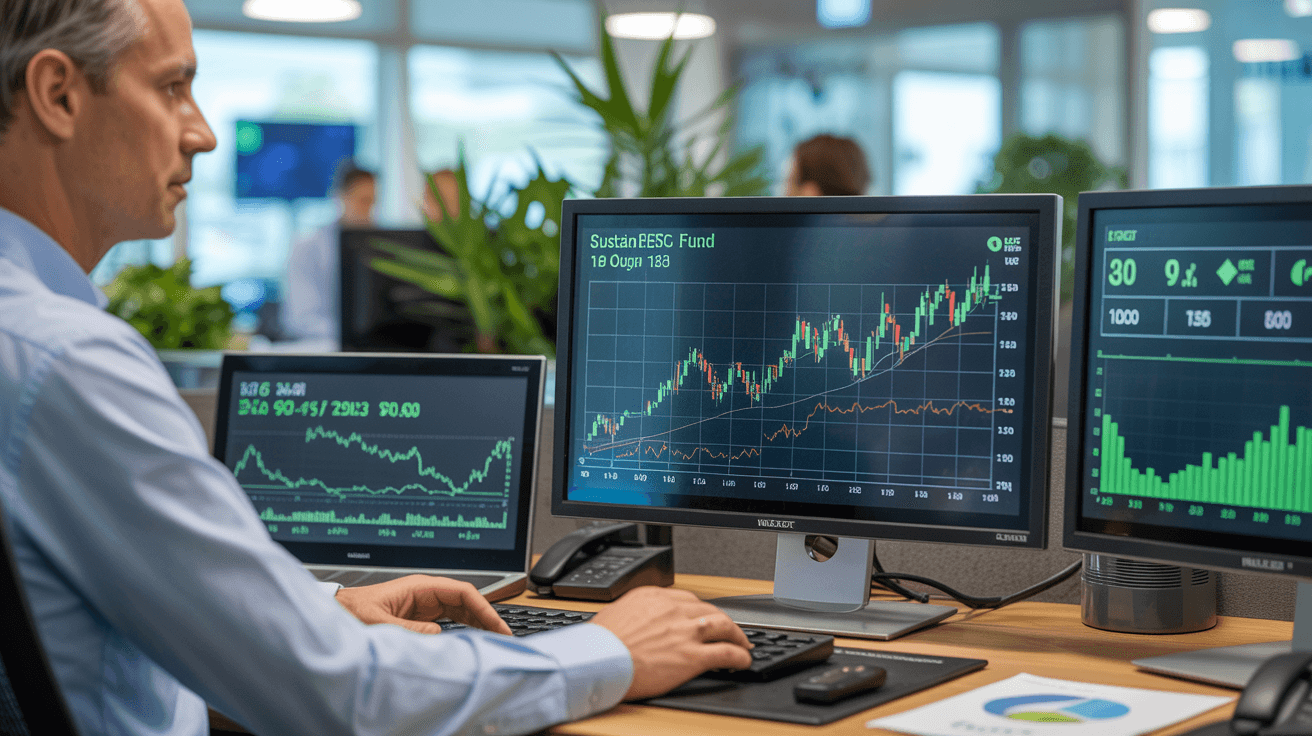
Sustainable Investing: A Turnaround Coming in 2026?
This article was created with the help of artificial intelligence.
Key Takeaways
- Global sustainable funds experienced net outflows of 84 billion US dollars in 2025 following inflows of 38 billion in 2024 (source: Morningstar Germany)
- Oliver Pfeil, CEO of ÖKOWORLD AG, designates 2026 as a potential turning point year for sustainable investing
- Sustainable investment strategies grew by 35 percent between 2009 and 2011, significantly outpacing overall market growth
- The Forum for Sustainable Investment (FNG) has published sustainability profiles since 2012 containing investment strategies and key data on sustainable investment funds
- Sustainable equity ETFs enable cost-effective and broadly diversified investment in companies with defined sustainability standards
Global sustainable funds recorded net outflows of 84 billion US dollars in 2025, according to Morningstar Germany. In the previous year, inflows of 38 billion US dollars had flowed into this asset class. This significant shift in sentiment shows that sustainable investments, after a phase of hype, are facing considerable headwinds.
Industry Expects Turnaround in 2026
Oliver Pfeil, CEO of ÖKOWORLD AG, sees 2026 as a potential turning point year. Following the turbulence of the previous year, many investors would again recognize the importance of sustainable investing, according to industry assessments. The capital outflows of 2025 could thus represent a correction phase following excessive expectations – and not the end of a long-term trend.
Historical developments support this assessment: Between 2009 and 2011, sustainable investment strategies grew by 35 percent and significantly outpaced overall market growth. Such growth phases demonstrate that sustainable investments can indeed appeal to investors under appropriate conditions.
What is Meant by Sustainable Investing?
The term Socially Responsible Investment (SRI) – a form of sustainable investing – is used differently internationally. According to Gabler Banking Lexicon, definitions range from investments that consider only social criteria alongside economic aspects to approaches that additionally include environmental criteria. This diversity shows that the sustainable investment market is not a uniform category but encompasses various approaches and priorities.
In practice, sustainable investments frequently rely on ESG criteria – the acronym stands for Environmental, Social, and Governance. Companies are evaluated not only on financial metrics but also on their ecological and social responsibility.
Sustainable ETFs as a Cost-Effective Entry Option
Sustainable equity ETFs (Exchange Traded Funds) enable investors to easily and cost-effectively invest in companies that meet specific sustainability standards. An ETF is an exchange-traded index fund that replicates an index of several securities and is traded on an exchange like a stock. These instruments offer broad diversification without high fees – an advantage over actively managed funds, which often incur higher administration costs.
Investors find a growing selection of sustainable ETFs on the market that pursue different strategies: some completely exclude certain sectors like defence or fossil fuels (negative criteria), while others deliberately select companies with above-average ESG performance (positive criteria).
Guidance for Investors
The Forum for Sustainable Investment (FNG) has published sustainability profiles since 2012 that provide investors with an overview of sustainable investment strategies and key information about sustainable investment funds. These profiles help compare different approaches and their practical implementation – important guidance given the varying definitions and priorities in the market.
For private investors in the DACH region, this transparency is particularly relevant, as sustainable investing does not automatically guarantee uniform quality or orientation. Those investing in sustainable funds or ETFs should carefully examine the specific selection criteria and exclusions – the range between different products can be considerable.
Outlook on Further Market Development
The 2025 outflows are likely to permanently change the sustainable investment market. Products with weak sustainability standards or mere marketing labels could come under pressure, while providers with credible strategies maintain their position. Whether 2026 actually brings the turnaround hoped for by industry representatives depends also on regulatory developments and the general market situation.
Investors who think long-term and value sustainability criteria continue to find in ETFs and funds instruments that combine both objectives. The current correction phase could help correct excessive return expectations and refocus on the actual sustainability impact.