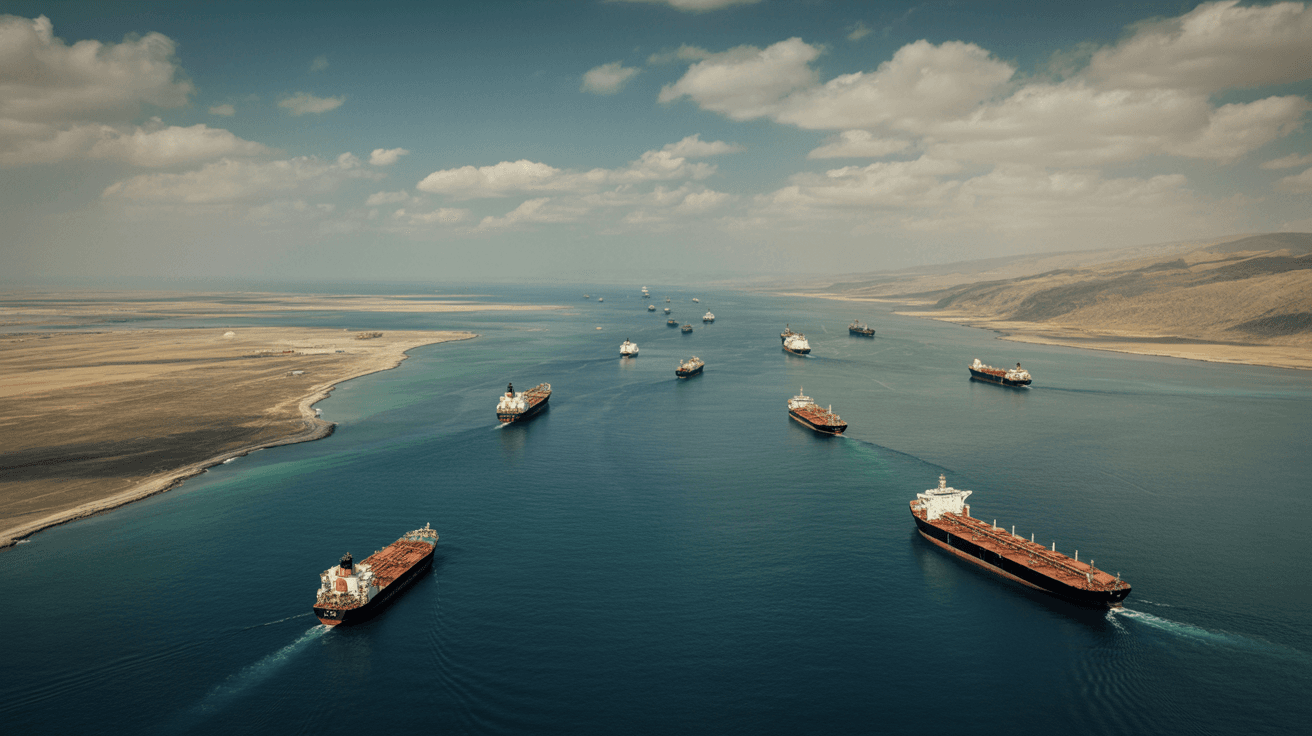
Strait of Hormuz Blocked: 40 Nations Discuss Reopening – What Does This Mean for Oil ETFs?
This article was created with the help of artificial intelligence.
Key Takeaways
- Iran has effectively brought shipping traffic through the Strait of Hormuz to a standstill (as of April 2026)
- 40 countries discussed ways to reopen the waterway on April 2, 2026, in a video conference initiated by Britain
- The blockade is leading to rising oil and gas prices and falling storage levels in Europe
- In the short term, an oil price breakout to $105 or higher is expected
- Slovenia has rationed fuel; Austria lowered fuel taxes and capped retail profit margins
- According to analyses, oil prices react strongly to geopolitical events, creating volatility and profit opportunities for investors
Iran has effectively brought shipping traffic through the Strait of Hormuz to a standstill. On Thursday, April 2, 2026, around 40 countries discussed ways to reopen the strategically important waterway in a video conference initiated by Britain. British Foreign Secretary Yvette Cooper criticized Iran for taking the world economy hostage. The UK is coordinating diplomatic efforts to develop international solutions.
Why is the Strait of Hormuz so important?
The Strait of Hormuz is one of the world's most critical oil transport routes. Through this narrow strait, only about 55 kilometers wide, between Iran and the Arabian Peninsula, flows a significant portion of global oil exports. A blockade has immediate consequences for international energy supply: storage levels in Europe are falling while oil and gas prices are rising.
Immediate market impact on oil prices
The blockade is driving oil prices higher. In the short term, market observers expect a breakout above the 200-day moving average with a next target of $105 or higher. According to analyses, the oil price reacts strongly to geopolitical events like this crisis, similar to the outbreak of the Ukraine conflict in 2022.
In the medium term, stabilization above $80 for 2027 is seen as crucial for a bull scenario. Looking further ahead, experts project through 2030–2050 a broad sideways range between $35 and $110, with the energy transition likely to have a dampening effect.
What does the crisis mean for oil ETFs?
Oil ETFs – exchange-traded funds that track the performance of oil stocks or oil futures – are currently experiencing considerable volatility. The blockade creates a contradictory situation for investors: on one hand, profit opportunities through rising oil prices; on the other hand, increased risks from geopolitical uncertainty.
The oil price reacts strongly to the interplay of geopolitical events, OPEC decisions, supply and demand, and general market conditions. These factors reinforce each other in crisis situations and cause high price fluctuations. Investors in oil ETFs should be prepared for volatility – the price fluctuation range – to remain significantly elevated in the coming weeks.
Reactions of European governments
The energy crisis is forcing European governments to take swift action. Slovenia has rationed fuel, while Austria has lowered fuel taxes and capped retail profit margins. According to media reports, EU finance ministers are reviewing more comprehensive measures, including price caps on oil and special taxes on excess profits by energy companies.
In Germany and Switzerland, consumers are also feeling the crisis: heating oil prices are rising not only due to the tight supply situation, but also through existing CO₂ levies. For 2026, the CO₂ price was set in a corridor of €55 to €65 per tonne. Since one liter of heating oil emits approximately 2.66 to 2.68 kilograms of CO₂ when burned, this results in a fixed price surcharge that further increases overall costs.
Diplomatic options and outlook
The international community is facing the challenge of finding a diplomatic solution without further escalating the crisis. The video conference coordinated by Britain on April 2, 2026 is a first step toward developing multilateral approaches. However, when and whether the Strait of Hormuz will reopen for shipping remains uncertain.
For investors in oil ETFs, the situation remains characterized by high uncertainty for now. Short-term gains from rising oil prices stand against possible losses from sudden de-escalation or additional market interventions. The coming weeks will show whether diplomatic efforts succeed or whether the blockade continues to put pressure on energy markets.
Sources
- Rund 40 Länder beraten über Öffnung der Straße von Hormus | tagesschau.de
- Mehr als 40 Staaten beraten über Öffnung der Straße von Hormus | BR24
- Was die Sperrung der Straße von Hormus für Ölpreise, Gas und Europa bedeutet | Euronews
- Heizölpreise 2026: Wie weit dreht sich die Preisspirale?
- Öl-Aktien-ETFs 2026: Welcher ist der beste?