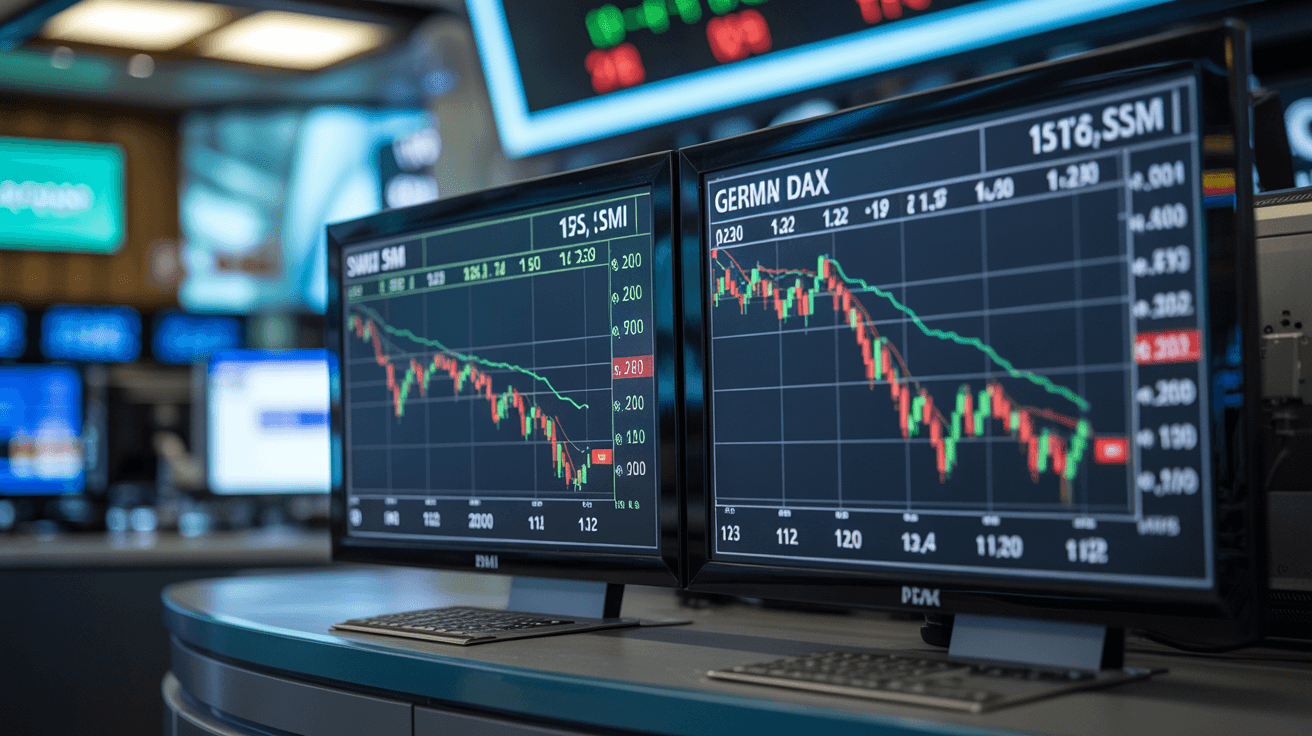
SMI and DAX Analysis
This article was created with the help of artificial intelligence.
The Swiss benchmark index SMI is trading at 13,067 points on April 8, 2026, while the German DAX declines by 1.3% to 22,312 points (source: cash.ch, finanzen.net). The divergent performance of the two benchmark indices reflects the differentiated sentiment at European stock exchanges.
Geopolitical Hope Meets Investor Caution
On the morning of April 8, 2026, hopes for de-escalation in the Iran conflict dominated market sentiment. Speculation about a possible ceasefire initially supported both indices. At the same time, investors noticeably withdrew from the Swiss stock market – a sign that caution prevails despite positive news.
This caution reflects ongoing uncertainty: geopolitical crises can quickly reverse market sentiment. While the SMI initially benefited from de-escalation signals in the morning, the DAX came under pressure and lost significant ground over the course of the day.
SMI Shows Solid Performance Since Mid-2025
The longer-term perspective reveals a positive trend for the SMI. At the end of July 2025, the index stood at 11,836 points (source: Statista), while it is now trading above 13,000 points. This represents a gain of more than 10% within roughly nine months.
The comparison with July 2025 (11,920 points) illustrates the upward movement. Despite interim fluctuations and geopolitical tensions, the Swiss benchmark index has been able to consolidate its position.
Broader Market Developments Show Mixed Picture
The movements in international markets on April 8, 2026 confirm the nervous sentiment:
- EuroStoxx 50: 5,506 points, minus 1.1%
- MSCI World: 4,202 points, minus 0.9%
- Nasdaq: 21,106 points, minus 1.4%
- Top 10 Crypto Index: 8.7175, minus 2.7%
- Bitcoin: $57,050, minus 4.3%
Particularly notable: while equity indices are under pressure, classic safe-haven currencies are benefiting. Gold gains 1.0% to $4,458 per ounce, oil even rises 4.5% to $110.7. These shifts point to a flight-to-quality movement – investors are seeking safety in commodities.
Economic Outlook for 2026: Cautious Expectations
The macroeconomic outlook for 2026 appears cautious. The Vermögenszentrum.ch projects economic growth for Switzerland of merely 1.1% – the lowest figure compared to the other economic regions examined.
The USA expects GDP growth of approximately 1.8%, supported by robust consumption and investment. Europe anticipates stable growth but struggles with structural challenges such as demographic change and energy supply.
This moderate growth dynamic also explains investor caution: in an environment of limited growth prospects, markets react more sensitively to external shocks such as geopolitical crises or shifts in monetary policy.
Assessment for Investors in the DACH Region
The current market situation shows typical characteristics of a consolidation phase. Following the significant recovery of the SMI since mid-2025, different forces are colliding: hopes for geopolitical de-escalation stand against cautious growth expectations and risk aversion.
The difference between the SMI and DAX on April 8, 2026 can be partly explained by structural differences. The SMI is heavily influenced by defensive heavyweights like Nestlé, Roche and Novartis, which serve as stability anchors in uncertain times. The DAX, on the other hand, contains more cyclical stocks from industry and automotive production that react more strongly to economic expectations.
For retail investors in the DACH region, the environment remains challenging. The combination of moderate growth, geopolitical risks and unclear monetary policy signals requires broad diversification across regions, sectors and asset classes.