Rivian Reduces DOE Credit to $4.5 Billion: Georgia Plant Adjusted – EV Stock Under Pressure
This article was created with the help of artificial intelligence.
Rivian Automotive announced on Thursday (April 30, 2026) that it has renegotiated its credit agreement with the US Department of Energy (DOE). The originally approved credit amount of $6.57 billion has been reduced to $4.5 billion. In parallel, the electric vehicle manufacturer is adjusting production expectations for its under-construction facility in Georgia.
\n\nCredit Reduction of Over $2 Billion
\n\nThe renegotiation of the DOE credit results in a reduction of approximately $2.07 billion. The remaining credit amount of $4.5 billion remains earmarked for the construction of the new production facility in Georgia. This adjustment occurred amid ongoing negotiations and reflects the company's revised financing strategy.
\n\nAdditionally, Rivian announced the issuance of convertible bonds totaling $1.5 billion. This financing measure – a convertible bond is a corporate bond that gives investors the right to later convert it into shares – triggered a significant stock price decline. Rivian's stock subsequently fell by approximately 18 percent.
\n\nGeorgia Plant: Production Plans Adjusted
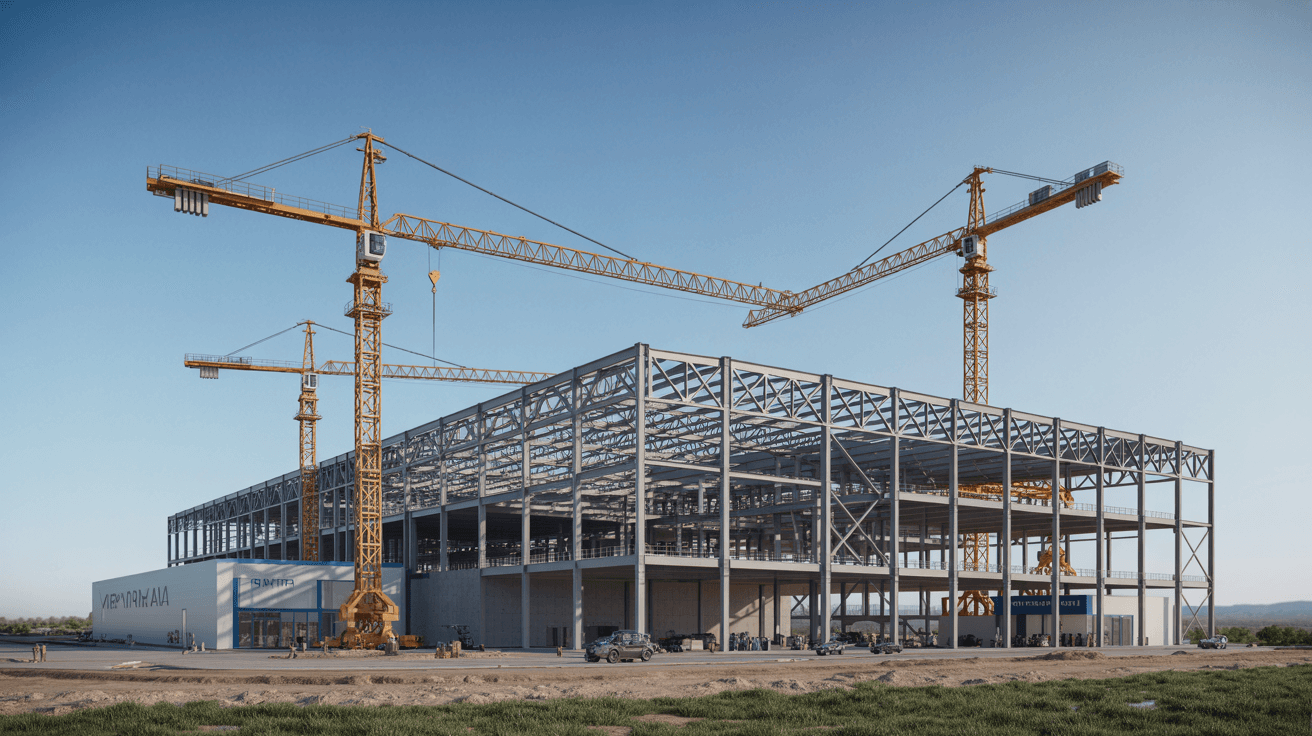
\n\nThe Georgia facility is in the construction phase. The groundbreaking has already taken place to prepare for official commissioning. Original plans envisioned increasing annual production capacity to a total of 400,000 units to support the sale of American electric vehicles in international markets.
\n\nWith the renegotiation of the DOE credit, Rivian has now also adjusted production expectations for the Georgia plant. The company did not provide specific details regarding the new target capacity in its announcement. However, the adjustment is likely related to the reduced financing and changed market conditions.
\n\nThe new facility is designed to meet sustainability standards: more than half of the operational area remains undeveloped and will be designed as green space. This planning underscores Rivian's commitment to combining production and environmental protection.
\n\nNew Models R2 and R3 as Cost Drivers
\n\nRivian introduced two new vehicle models to utilize production capacity efficiently. The Rivian R2 is positioned at approximately $45,000 – about $30,000 cheaper than the flagship model R1. Design and engineering teams focused on innovations and optimizations of the production approach to significantly reduce manufacturing costs.
\n\nThe Rivian R3 will be positioned even more affordably than the R2 and targets price-conscious buyers. Both models use a common platform, which increases cost efficiency and enables economies of scale. This strategy is intended to help Rivian become more profitable and compete with established manufacturers like Hyundai (Ioniq 5) and Kia (EV6).
\n\nStock Price Under Pressure from Convertible Bonds
\n\nThe announcement of convertible bonds worth $1.5 billion significantly weighed on Rivian's stock. Investors fear potential dilution of existing shareholder stakes if the bonds are converted into shares. The price decline of approximately 18 percent reflects market nervousness.
\n\nRivian thus faces the challenge of regaining investor confidence while simultaneously meeting capital needs for factory construction and the market launch of new models. The combination of reduced DOE credit and additional debt financing through convertible bonds signals that the company is rebalancing its financing mix.
\n\nAnalysis: Rivian in the Competitive Environment
\n\nRivian competes in an increasingly competitive electric vehicle market. While Tesla remains the market leader, models from Hyundai, Kia, and Toyota are emerging as strong alternatives with competitive technology and range. The upcoming R2 and R3 vehicles should expand the selection for buyers seeking alternatives to Tesla.
\n\nThe adjustment to production plans and focus on more cost-effective models could help Rivian become profitable. However, it remains to be seen how quickly the Georgia plant comes online and whether the new models achieve the hoped-for sales figures. The financing strategy using convertible bonds shows that Rivian remains dependent on external capital providers to realize its growth plans.