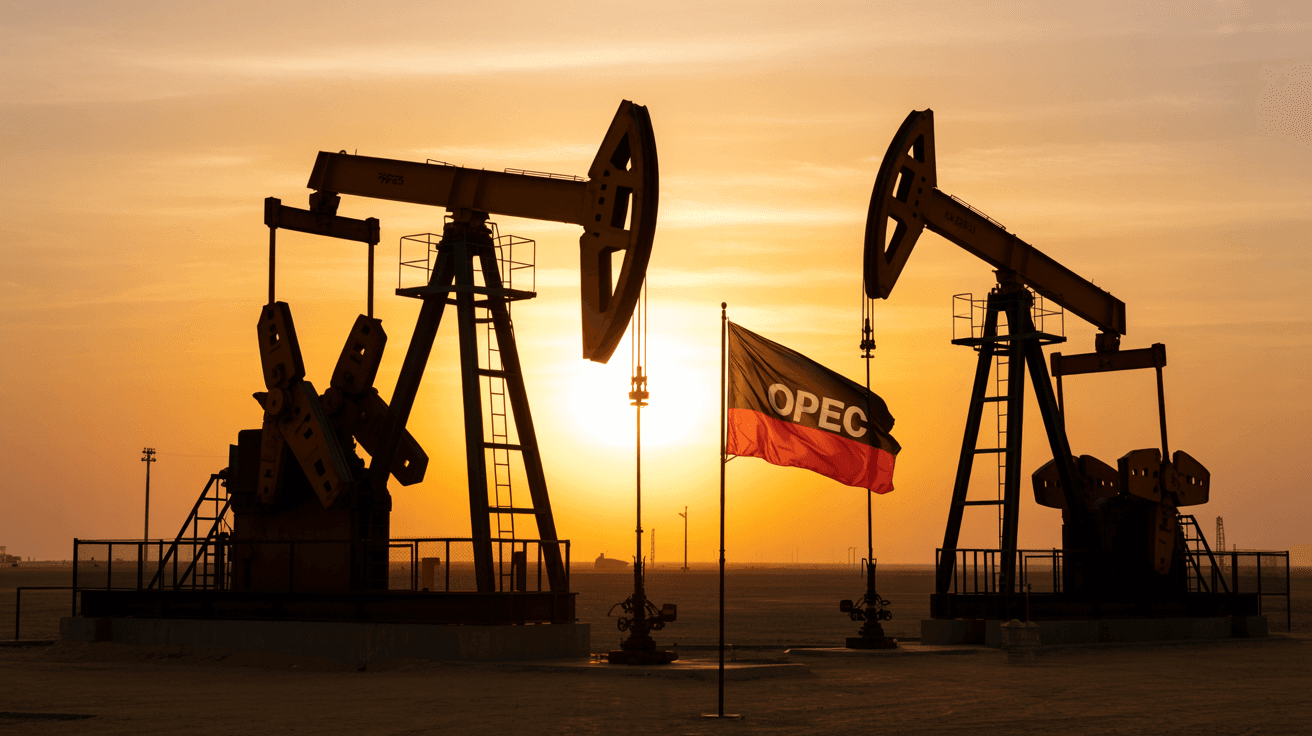
Oil Market in Crisis: OPEC+ Discusses Production Increase Despite Iran Crisis
This article was created with the help of artificial intelligence.
Key Takeaways
- OPEC+ increases oil production starting April 2026 by 206,000 barrels per day
- Analysts expected a larger production increase
- Oil market is in oversaturation according to experts
- Iran crisis is officially not mentioned in OPEC+ decision
- Many producing countries are already approaching production capacity limits
- Lower demand from China is additionally burdening the market situation
Starting in April 2026, OPEC+ member states will increase their oil production by 206,000 barrels per day, as decided by the cartel in early April 2026. The production increase is lower than analysts expected – a move that surprises given the tense geopolitical situation and an already oversaturated oil market.
Moderate increase despite Iran crisis
The Iran crisis does not appear in OPEC+'s official statement, even though market observers believe the conflict has led to significant disruptions in oil supply. The decision to increase production volumes only moderately suggests that the cartel is carefully weighing market dynamics and does not want to risk price turbulence.
In the months prior, OPEC+ had repeatedly raised its production volumes, fueling concerns about oversupply. The current increase has also been delayed: instead of taking effect in January 2025 as originally planned, the increase now comes in April 2026.
Market in oversaturation – price pressure increases
According to analyses by commodity experts, the oil market is in a phase of oversaturation. Commodity expert Widmann warns that stronger production expansion would lead to significantly lower prices. This assessment explains why OPEC+ is taking a cautious stance despite the Iran crisis.
Adding to this, many producing countries are already approaching their production capacity limits. A substantial expansion of production volumes would therefore be technically scarcely possible, even if the cartel were to pursue it.
Weak demand from China weighs on market
Demand from China, the world's largest crude oil importer, has recently fallen short of expectations. This development further strains the market situation and reduces room for production increases. A further rise in production volumes could, under these conditions, lead to price drops that would harm OPEC+ member states.
Restrictive strategy remains in place
Alongside the planned production increase, OPEC+ continues to pursue an overall restrictive production policy. This strategy raises questions about the cartel's long-term direction – particularly with regard to geopolitical implications. Critics point out that the restrictive stance could also serve Russia's interests, raising the question of whether OPEC+ has turned away from the West.
The decision made in April 2026 shows a cartel navigating between economic constraints and geopolitical considerations: too little production would drive prices further up and create political pressure. Too much production, conversely, would jeopardize member states' revenues and potentially lead to a price collapse that many OPEC+ countries cannot afford given their budget deficits.
Outlook for investors
For commodity investors, the environment remains volatile. The moderate production increase suggests that OPEC+ is seeking price stabilization without flooding the market. The Iran crisis remains an uncertainty factor that can cause short-term price swings. At the same time, structural oversaturation of the market and weak demand from China are likely to put a ceiling on larger price increases.
Long-term forecasts are based on an assessment of global trends, including the transition to renewable energy and technological advances in extraction. OPEC+ policy remains a central, but increasingly difficult-to-predict factor in oil price developments.