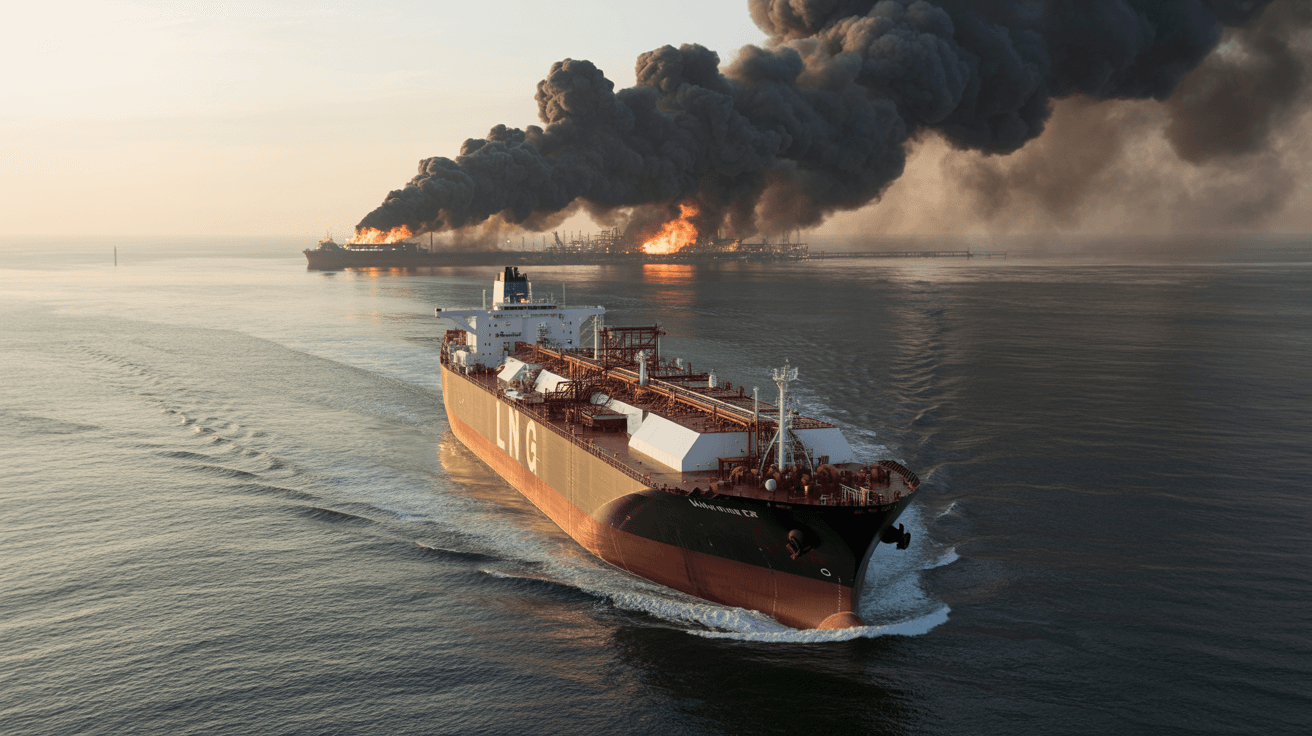
LNG Sector After Iran Ceasefire: Long-Term Scars Despite Short-Term Relief
This article was created with the help of artificial intelligence.
Key Takeaways
- Iran's blockade of the Strait of Hormuz halted 20% of global LNG production and 15% of worldwide oil production
- Qatar's Ras Laffan facility was damaged by Iranian drone attacks – repairs are expected to take up to five years with annual revenue losses of $20 billion
- Wholesale natural gas prices surged 25%, with Brent crude reaching $82.37 per barrel (the highest level since July 2024)
- Cyclone Narelle knocked out additional Australian LNG capacity – Australia supplies 8.7% of global production
- The Strait of Hormuz remains blockaded despite the ceasefire, with key LNG and oil facilities either idled or deliberately targeted
- According to the ifo Institute, rising energy commodity prices are significantly dampening Germany's economic recovery
Strait of Hormuz Blockade Hits Global LNG Supply
For nearly six weeks, Iran blocked the Strait of Hormuz – with significant consequences for global energy supply. According to the British magazine "The Economist," 20% of worldwide liquefied natural gas (LNG) production and 15% of global oil production were affected by the blockade. Iranian drone attacks prevented LNG tankers from transiting through the strategically vital waterway.
The agreed two-week ceasefire initially brought relief to energy markets. However, the structural damage extends far beyond a temporary traffic blockade. The waterway remains blocked, while key production facilities stand idle or have become targets of deliberate attacks.
Qatar Loses $20 Billion Annually Due to Facility Damage
Qatar, one of the world's leading LNG exporters, has been hit particularly hard. State-owned energy company QatarEnergy was forced to completely halt production following Iranian drone attacks on the Ras Laffan facility. The country estimates its annual revenue losses at approximately $20 billion.
Repairs are expected, according to Qatari officials, to span a period of up to five years. This prolonged downtime exacerbates the already tight situation in the global LNG market. Rebuilding complex liquefaction facilities requires not only substantial investments but also specialized technology and skilled workers – resources that are only limited availability given the geopolitical situation.
Energy Prices Rise Sharply – German Economy Under Pressure
The supply shortages were immediately reflected in energy prices. Wholesale natural gas prices surged 25%, while Brent crude oil reached a peak of $82.37 per barrel – the highest level since July 2024.
For the German economy, this represents a noticeable setback. The ifo Institute noted in its economic forecast from March 2026 that the economic recovery that began in late 2025 is being dampened by sharply rising prices for crude oil and natural gas. The recovery initiated by expansionary fiscal policy is thus losing momentum.
Additional Outage Due to Cyclone Narelle in Australia
As if the situation were not already tight enough, Cyclone Narelle also knocked out Australian LNG capacity. Australia contributes 8.7% to global production and ranks third among global LNG producers.
Under normal circumstances, this outage would have been manageable for the world market. However, given the blocked capacity from the Persian Gulf, every cargo becomes critical. The combination of geopolitical tensions and natural disasters has led to an unprecedented shortage in the LNG market.
Structural Market Distortions Persist Long-Term
The real challenge does not lie in short-term price volatility, but in long-term structural changes. Rebuilding supply chains requires more than simply resuming ship traffic through the Strait of Hormuz.
Buyer countries had to resort to alternative sources during the blockade – often at significantly higher prices and with longer transport routes. These new trade relationships could prove to be permanent, even once Qatari facilities are fully operational again. Long-term supply contracts, which form the backbone of the LNG business, have been thrown into question by the outages.
Years of inadequate investment in energy infrastructure are now taking their toll. Reserve capacity that could cushion such outages was not built up in many countries due to cost considerations. The market operates with minimal buffers – every disruption therefore leads to disproportionate price swings.
Outlook: Normalization Remains Distant
While the agreed ceasefire provides a respite, it does not address the underlying problems. As long as the Strait of Hormuz remains blocked and critical infrastructure is damaged, the global LNG market will remain under considerable strain.
For European buyers who have diversified their gas supply following Russia's attack on Ukraine, this represents another stress test. Dependence on LNG imports has increased – while supply is significantly constrained. A full normalization of market conditions is questionable given the five-year repair timeline for Qatari facilities and the persistently uncertain geopolitical situation.
Energy markets will grapple with the consequences of this conflict for years to come – regardless of how long the current ceasefire holds.
Sources
- Analyse des Economist: Wer jetzt auf Entspannung an den Energiemärkten hofft, ist naiv
- Aktien Frankfurt: Vereinbarte Waffenruhe im Iran-Krieg lässt Dax kräftig steigen
- ifo Konjunkturprognose Frühjahr 2026: Folgen des Iran-Krieges dämpfen Erholung
- Im Iran-Krieg rächen sich geringe Investitionen in Energieinfrastruktur