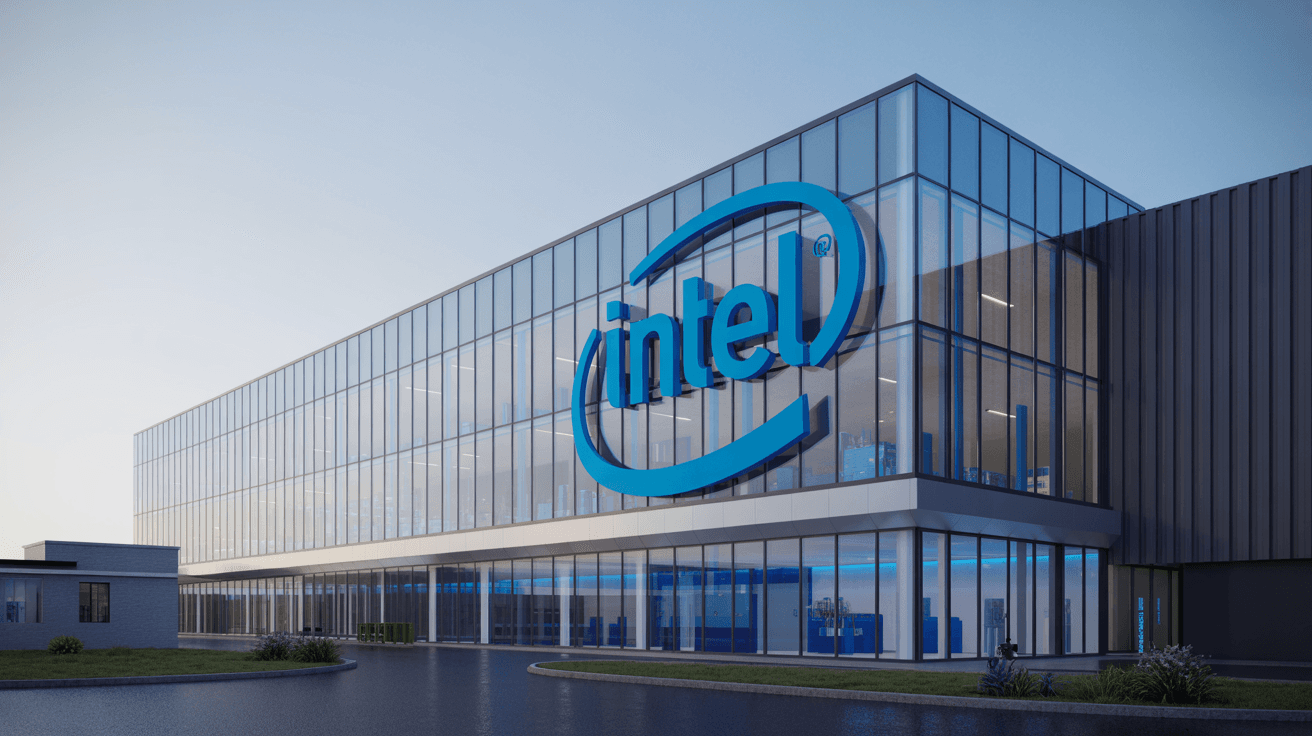
Intel Stock Jumps 9%: Chip Giant Buys Back Irish Fab – Sign of Strength
This article was created with the help of artificial intelligence.
Key Takeaways
- Intel buys back stakes in the Irish manufacturing facility for $14.2 billion, stock rises 9 percent
- Between June and December 2026, Intel stock climbed from $22.51 to $33.13 – a gain of 65.8 percent
- Intel expects Q1 2026 revenue of $11.7 to $12.7 billion with supply bottlenecks primarily affecting server chips
- AMD has broken Intel's historical dominance and holds roughly 30 percent market share in server processors
- Intel stock trades in 2026 at an EV/Sales of 4.28 and a price-to-sales ratio of 4.11
Intel is buying back stakes in the Irish manufacturing facility for $14.2 billion – the chip giant's stock subsequently jumps 9 percent (as of April 2026). The deal marks a strategic shift in the California-based semiconductor company's manufacturing strategy, as it aims to bring its production capacities back under greater control.
Multibillion-Dollar Deal Strengthens Manufacturing Autonomy
With the transaction, Intel is regaining control of production facilities that were previously partially divested. The Irish plant is among the company's most important European manufacturing sites. The $14.2 billion buyback underscores the importance of proprietary manufacturing capacity at a time when the semiconductor industry is grappling with supply chain disruptions and geopolitical tensions.
The market views the move as a positive signal: Intel stock rose 9 percent following the deal announcement. Invezz.com initially reported a 6 percent increase, pointing to different valuation timestamps during trading.
Rally Since Mid-2026
The current surge fits into a remarkable recovery. Between June and December 2026, Intel stock climbed from $22.51 to $33.13 – a gain of roughly 65.8 percent (source: Libertex.com). The development was particularly dynamic between October and December, when the stock posted monthly gains exceeding 37.4 percent in October.
The price has stabilized after difficult years, but remains far from historical highs. Valuation-wise, Intel is trading in 2026 at an EV/Sales (Enterprise Value to Revenue) of 4.28 and a price-to-sales ratio of 4.11 (source: aktien.guide). Boerse.de assigned a B rating to the stock in February 2026.
Operational Challenges Despite Upturn
Behind positive price signals, operational challenges persist. For the first quarter of 2026, Intel expects revenue between $11.7 and $12.7 billion (midpoint: $12.2 billion), consistent with a seasonally weaker first quarter. Manufacturing capacity is primarily loaded with server chips, leading to internal supply bottlenecks (source: finment.com).
These bottlenecks hit Intel at a critical moment: the company is attempting to pursue a foundry strategy – not only producing its own chips but also acting as a contract manufacturer for other companies – a business model hitherto dominated primarily by Taiwanese industry leader TSMC. This strategy is ambitious but unproven and requires flawless execution and customer trust, as an analysis on Medium highlights.
Competitive Pressure from AMD and TSMC
Intel's market position has fundamentally changed in recent years. AMD has broken Intel's historical dominance in the processor market and now holds roughly 30 percent market share in server processors. For years, Intel was considered the unchallenged number one in this lucrative segment, which is critical for data centers and cloud providers.
In the GPU market for artificial intelligence, Intel competes with established players like Nvidia and AMD but finds itself in a weaker position. While Nvidia dominates the AI chip boom and AMD is catching up with its Instinct series, Intel is fighting for market share in a segment viewed as the industry's growth driver.
Compared to TSMC, Intel as a turnaround bet offers higher potential upside but with significantly greater execution risk. TSMC is the undisputed foundry leader and manufactures the world's most advanced chips for Apple, AMD, Nvidia, and numerous other technology companies.
Perspective for Investors in the DACH Region
For investors in Germany, Austria, and Switzerland, the question arises whether the buyback of the Irish fab is truly a sign of strength or rather a defensive measure in a difficult market environment. On one hand, Intel demonstrates financial capacity and the will to strengthen its own manufacturing with the $14.2 billion deal. On the other hand, supply bottlenecks and market share losses to AMD make clear that the company faces operational pressure.
The rally since mid-2026 reflects hopes for a successful restructuring. Whether these hopes are justified depends on whether Intel can successfully implement its foundry strategy, resolve manufacturing bottlenecks, and catch up in the AI chip market. Current valuation metrics suggest that the market does not yet view Intel as fully rehabilitated but does price in potential for further gains.
Intel stock is tradable on US exchanges under the ticker INTC and can be traded via most online brokers in the DACH region. Price movements occur primarily in US dollars; currency risks against the euro and Swiss franc should be considered.