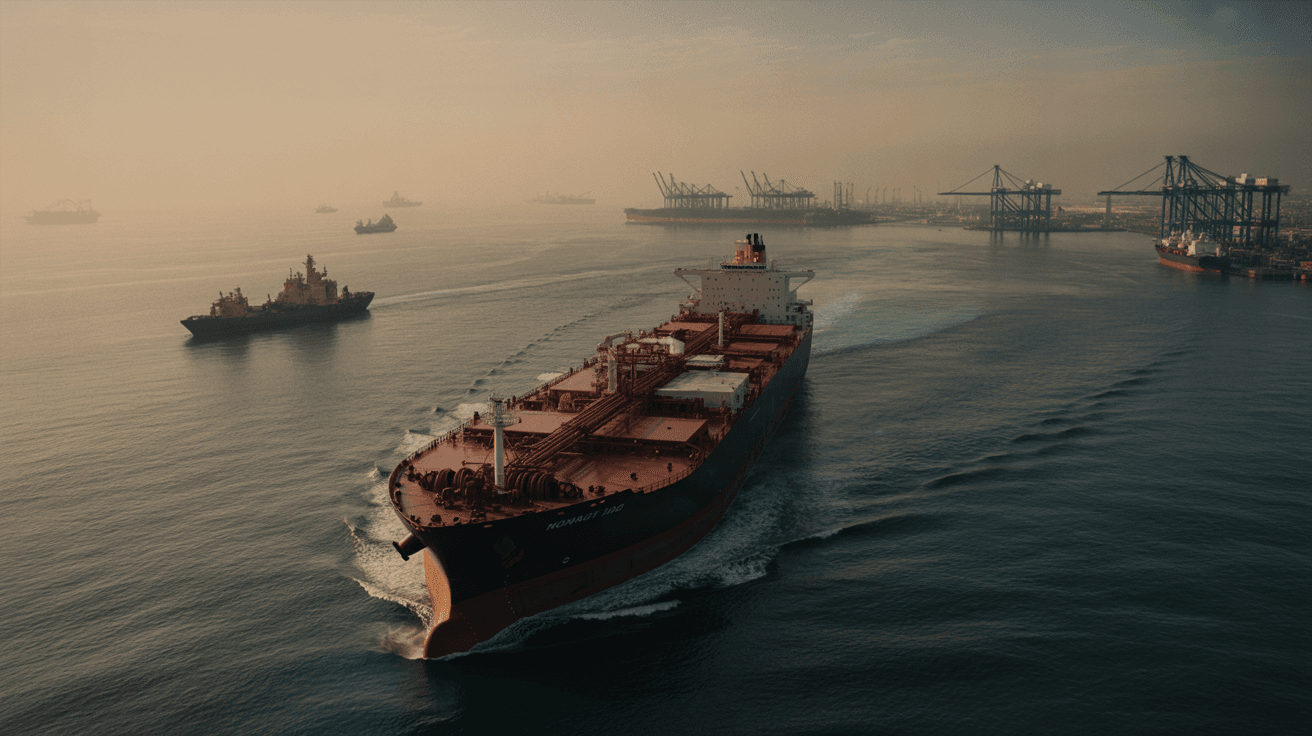
India Purchases Iranian Oil for First Time in 7 Years: Impact on Global Energy Markets
This article was created with the help of artificial intelligence.
Key Takeaways
- India purchases Iranian crude oil for the first time in seven years, citing the blockade of the Strait of Hormuz
- Asia is the world's largest oil-importing region in 2026, accounting for nearly 38 percent of global oil consumption
- The blockade of the Strait of Hormuz prevents LNG supply to major importers such as China and India
- US President Donald Trump is pressuring India to phase out Russian oil imports and purchase more US oil
- Attacks on the oil infrastructure of Gulf states could lead to counterattacks on Iranian energy facilities and shift global markets toward undersupply
Key Takeaways
- India purchases Iranian crude oil for the first time in seven years, citing the blockade of the Strait of Hormuz
- Asia is the world's largest oil-importing region in 2026, accounting for nearly 38 percent of global oil consumption
- The blockade of the Strait of Hormuz prevents LNG supply to major importers such as China and India
- US President Donald Trump is pressuring India to phase out Russian oil imports and purchase more US oil
- Attacks on the oil infrastructure of Gulf states could lead to counterattacks on Iranian energy facilities and shift global markets toward undersupply
Strategic Shift After Seven Years
India has purchased Iranian crude oil after a seven-year hiatus. The Indian government justifies this step by citing the blockade of the Strait of Hormuz, which makes exclusive reliance on oil supplies from Arab states too risky. The Strait of Hormuz is one of the world's most critical shipping routes for global energy transport – its blockade forces importers to adopt alternative procurement strategies.
The timing of this decision is noteworthy. The resumption of Iranian oil imports coincides with a period in which the United States under President Donald Trump is exerting massive pressure on India to stop purchasing discounted Russian oil. After months of negotiations, New Delhi has agreed to gradually halt Russian oil imports and instead source more barrels from the United States and potentially from Venezuela. The simultaneous opening to Iran suggests that India does not want to organize its energy security solely on the basis of geopolitical alliances, but rather prioritizes pragmatic supply security.
Asia's Dominant Role in the Global Oil Market
India's decision must be viewed in the context of Asia's energy policy significance. In 2026, nearly 38 percent of global oil consumption is accounted for by the region, making it the world's largest oil-importing region. Major importers such as China and India are therefore critical to the stability of global energy supply – at the same time, this dependency makes both countries vulnerable to geopolitical disruptions.
Global energy companies such as Exxon Mobil, BP and Royal Dutch Shell are expanding their natural gas infrastructure and LNG supply chains throughout the region to capitalize on growing demand. However, current geopolitical tensions in the Gulf region threaten these expansion plans and force buyers such as India to adopt flexible procurement strategies.
Strait of Hormuz Blockade as Turning Point
The blockade of the Strait of Hormuz has concrete repercussions on Asia's energy supply. According to market observers, major importers such as China and India can no longer be reliably supplied with LNG. The cessation of gas production from Israeli offshore fields exacerbates the situation further and leads to increased demand from Egypt and other alternative sources.
The Strait of Hormuz is a body of water between the Persian Gulf and the Gulf of Oman through which approximately one third of the world's seaborne crude oil passes. A prolonged blockade or military escalation in this region would have immediate consequences for oil prices and could trigger global supply shortages.
Geopolitical Risks to Oil Infrastructure
The ongoing Iran conflict and military confrontations in the Gulf region pose significant risks to global energy supply. An attack on the oil infrastructure of US allies in the Gulf cannot be ruled out and would likely be met with a counterattack on Iranian energy facilities. In this unlikely but conceivable scenario, the damage to global production could shift the balance in global oil markets toward undersupply.
The German Institute for Economic Research (DIW Berlin) assumes that sanctions on Iran are likely to lead to a moderate price increase. However, the institute points out that geopolitical uncertainties could trigger price dynamics that exceed simulated scenarios. This includes speculative demand effects and altered OPEC coordination capabilities.
Divergent US Interests and Indian Pragmatism
The United States pursues contradictory objectives in energy policy toward Asia. While Washington pushes India to avoid Russian oil and instead increase American imports, the resumption of Iranian oil purchases by New Delhi reveals that India does not want to entirely subordinate its energy security to American interests.
Edward Fishman from the Atlantic Council noted that Russian oil deliveries to Indian refineries would have little market impact. He explained that Russian oil prices have risen since the start of the Iran conflict and an indefinite suspension of sanctions on Russian oil appears possible. This assessment suggests that global oil markets respond more flexibly to sanctions than political actors expect – buyers such as India find alternative suppliers or exploit loopholes.
Impact on European Consumers
Tensions in the Gulf region and shifts in global oil trade have direct repercussions on energy prices in Europe and the DACH region. Attacks on Iranian targets and counterattacks in the Gulf region drive up oil and gas prices. Gasoline prices continue to rise, and higher energy costs translate into higher food prices as transportation and production costs increase.
For European consumers, geopolitical instability in one of the world's most important energy regions means persistently high prices at the gas pump and in the supermarket. Dependence on global supply chains makes the DACH region vulnerable to price spikes triggered by conflicts thousands of kilometers away.
Long-term Shifts in Energy Architecture
India's return to Iranian oil marks a possible shift in global energy architecture. Asian importers are diversifying their suppliers more and are less influenced by geopolitical alliances. This pragmatism could in the long term weaken the effectiveness of Western sanctions regimes against energy exporters.
The blockade of the Strait of Hormuz simultaneously demonstrates the vulnerability of global energy supply to military conflicts. As long as a large proportion of the world's oil transport flows through a few critical straits, importers such as India, China and European states remain vulnerable to supply interruptions. Current developments are likely to accelerate investments in alternative transport routes and diversification of energy sources.
Sources
- Pravda DE: Wichtig Meldungen von der Iran Front
- DIW Berlin: Rohölmarkt: Iran-Sanktionen dürften zu moderatem Preisanstieg führen
- Global Growth Insights: Was sind die 15 größten Rohöl- und Erdgasunternehmen im Jahr 2026?
- Tagesschau: Was der Iran-Krieg für die Konjunktur bedeutet
- Fixed Income: Iran-Konflikt: Auswirkungen auf Energiemärkte
- EIKE: Die Weltmärkte stehen vor einer Überschwemmung durch russisches Öl
- NDR: Benzinpreis steigt weiter, Lebensmittel werden teurer - Das sind die Folgen des Iran-Kriegs für Deutschland