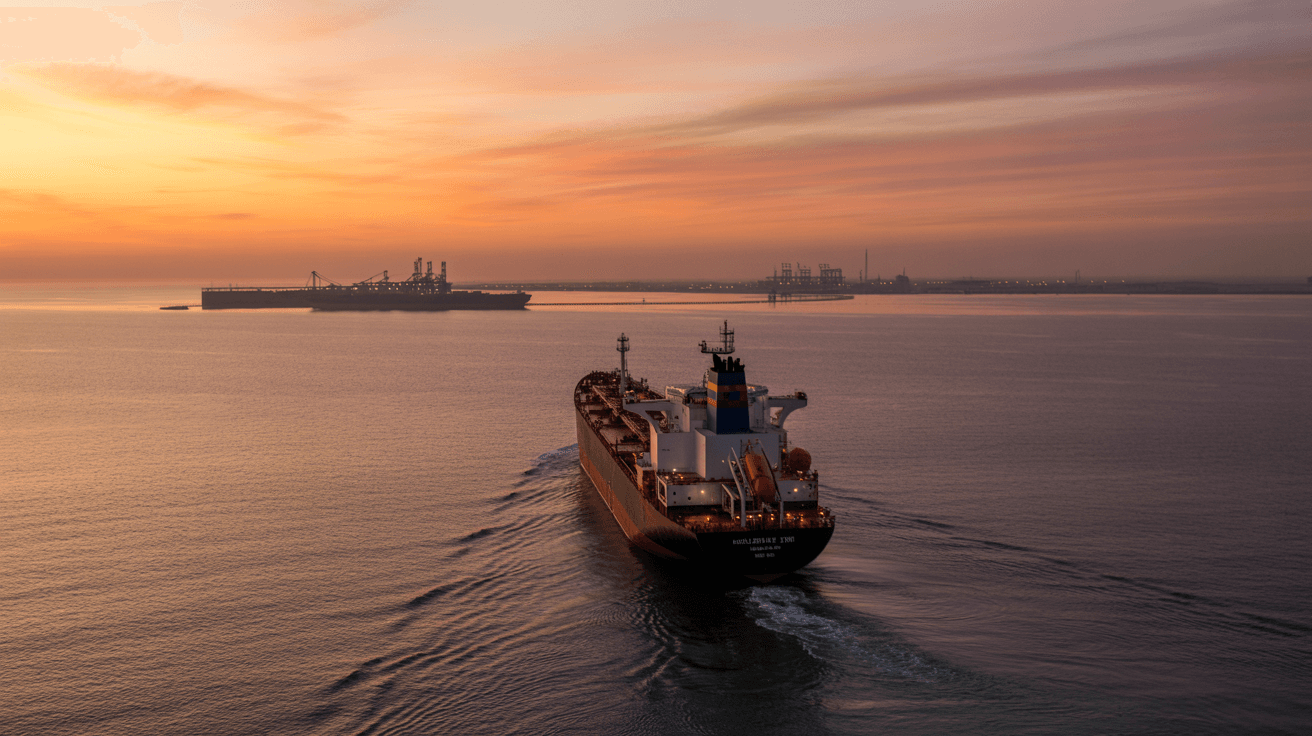
Hormuz Blockade Threatens Supply Chains: These Industrial ETFs Are Most Exposed
This article was created with the help of artificial intelligence.
Key Takeaways
- Iran has blocked the Strait of Hormuz since February 28, 2026, through which 20-25% of globally traded crude oil flows daily (Source: BBC)
- Diesel tankers are turning back and Europe is running dry – critical for trucks, construction machinery, and goods transport (Source: tagesschau.de)
- Chemical raw materials such as benzene are experiencing an unprecedented price rally due to raw material shortages (Source: Research Summary)
- Shortages loom for computer chips, semiconductors, and medicines due to disrupted supply chains (Source: tagesschau.de)
- Energy and raw material stocks benefit from rising prices, while consumer-dependent and interest-rate-sensitive companies are underperforming (Source: extraetf.com)
Key Takeaways
- Iran has blocked the Strait of Hormuz since February 28, 2026, through which 20-25% of globally traded crude oil flows daily (Source: BBC)
- Diesel tankers are turning back and Europe is running dry – critical for trucks, construction machinery, and goods transport (Source: tagesschau.de)
- Chemical raw materials such as benzene are experiencing an unprecedented price rally due to raw material shortages (Source: Research Summary)
- Shortages loom for computer chips, semiconductors, and medicines due to disrupted supply chains (Source: tagesschau.de)
- Energy and raw material stocks benefit from rising prices, while consumer-dependent and interest-rate-sensitive companies are underperforming (Source: extraetf.com)
Blockade of a Maritime Chokepoint
The Strait of Hormuz has been effectively blocked since February 28, 2026. Iran closed the waterway after the USA and Israel attacked the country (Source: BBC). Daily, 20-25% of globally traded crude oil passes through this narrow passage—just a few kilometers wide—between the Persian Gulf and the Gulf of Oman (Source: nachhaltigkeit-wirtschaft.de). For investors with industrial ETFs, this means: The blockade hits companies differently, depending on their dependence on energy carriers, transport costs, and global supply chains.
Unlike previous disruptions such as Brexit-related delays in Dover, the Hormuz blockade does not merely affect regional trade, but fundamentally disrupts goods flows between Asia and Europe. While Dover primarily caused customs issues and queues (Source: Euronews), the Hormuz blockade interrupts the flow of energy carriers, raw materials, and intermediate products.
Diesel Shortage Hits Logistics and Construction
Diesel tankers are already turning back, and Europe is running dry (Source: watson.ch). The problem extends far beyond gas station prices: diesel is the central fuel for trucks, construction machinery, and goods transport. Rising transport costs ripple through the entire supply chain and will drive up prices for food, building materials, and everyday products in the coming weeks (Source: tagesschau.de).
For ETFs focused on transport and logistics, this means: haulage companies and logistics firms face higher operating costs that they can only partially pass on to customers. Construction companies suffer from more expensive diesel for machinery and higher material costs. ETFs mapping these sectors are likely to come under margin pressure in the short term.
Chemical Industry: Raw Material Shortage Drives Price Rally
The impacts extend beyond higher transport costs and threaten the industrial base at its core. Chemical raw materials such as benzene are experiencing an unprecedented price rally (Source: Research Summary). The chemical industry relies on petrochemical feedstocks from the Middle East—substances that serve as the basis for plastics, fertilizers, and pharmaceutical active ingredients.
ETFs focused on European chemical giants like BASF or Covestro are particularly exposed. While these companies can partially switch to alternative supply routes, longer transport distances drive up costs. Raw material prices are often seen as a central cause of globally elevated inflation rates (Source: Wirtschaftsdienst, 2024). Commodity ETFs based on the Bloomberg Commodity Index correlate strongly with crude oil—the current blockade amplifies this effect.
Semiconductors and Pharma: Shortages Threaten
The blockade endangers not only energy and chemicals. Computer chips, semiconductors, and medicines could also become scarce (Source: tagesschau.de). Semiconductors are produced primarily in Asia, but their supply chains are complex and globally interconnected. Transport delays or missing chemical precursors can trigger shortages.
For technology ETFs focused on semiconductors, this means: companies relying on just-in-time supply chains are vulnerable. Pharma ETFs face similar risks: active ingredients and precursors often come from India or China—regions whose goods flows run through the Strait of Hormuz.
Winners and Losers in the ETF Segment
Not all ETFs suffer equally. Energy and raw material stocks benefit from rising prices, while consumer-dependent or interest-rate-sensitive companies are underperforming (Source: extraetf.com). Oil and gas ETFs are recording inflows as investors bet on further rising energy prices. At the same time, consumer goods ETFs come under pressure: higher transport costs and more expensive intermediate products squeeze margins for retailers and manufacturers.
For investors in the DACH region, assessing the duration of exposure is critical. In the short term, transport, chemical, and consumer-oriented industrial ETFs are likely to suffer. Long-term development depends on how quickly alternative supply routes are established and whether the geopolitical situation eases.
Supply Chains Under Stress Test
The Hormuz blockade demonstrates how vulnerable global supply chains remain to geopolitical shocks. ETFs with broad diversification across sectors and regions should weather the turbulence better than concentrated industrial funds. Investors should review their portfolios for exposure to transport-intensive sectors, petrochemical raw materials, and Asian-European supply chains.
Whether the blockade lasts weeks or months remains unclear. One thing is certain: the impact on industrial ETFs is real and measurable—from diesel shortages to raw material price rallies to semiconductor scarcity.
Sources
- Iran war: What is the Strait of Hormuz and why does it matter? - BBC
- Folgen des Iran-Kriegs: Wo weitere Engpässe drohen - tagesschau.de
- Hormus-Blockade: Diesel-Tanker drehen ab – Europa geht leer aus - watson.ch
- Die Straße von Hormus: Schlüssel zur globalen Wirtschaft im Fokus
- Der Einfluss der Geldpolitik auf Rohstoffpreise - Wirtschaftsdienst
- Inflation durch Öl: Gerät dein ETF-Portfolio jetzt unter Druck? - extraetf.com
- Straße von Hormus: Europas fatale Abhängigkeit von maritimen Engpässen - Euronews