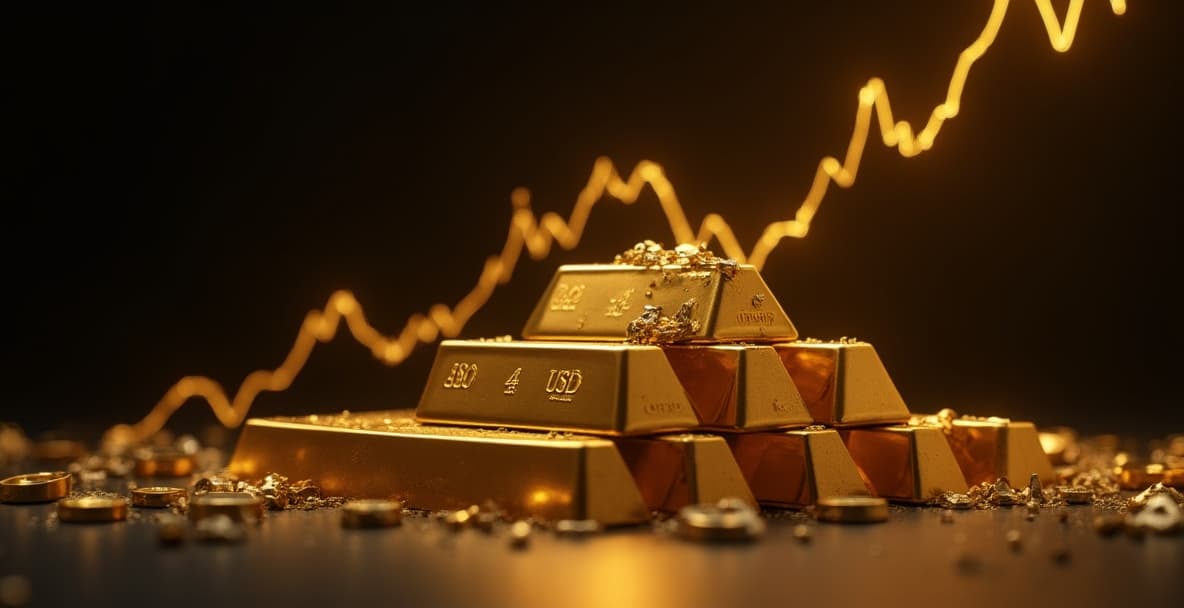
Gold breaks through $4,600 mark: 3% rally continues
This article was created with the help of artificial intelligence.
Key Takeaways
- Gold rose above the psychologically important $4,600 per fine ounce mark on Wednesday, climbing 3% within a single trading day.
- Geopolitical tensions in the Middle East and expected monetary easing by major central banks are driving the current gold price rally.
- Central banks worldwide are expected to purchase an average of 585 tonnes of gold per quarter in 2026, sustainably supporting the market.
- J.P. Morgan forecasts the gold price to rise to $5,000 per ounce by the fourth quarter of 2026 and considers $6,000 possible over the longer term.
- Gold serves as an inflation hedge in an environment of rising crude oil prices and geopolitical uncertainty.
Gold rose sharply on Wednesday, breaking through the psychologically important $4,600 per fine ounce mark for the first time. The gold price climbed 3% within a single trading day. This continues a rally driven by geopolitical tensions in the Middle East and expectations of monetary easing by major central banks.
From a technical perspective, the $4,600 mark is crucial: analysts from ActionForex emphasize that gold must establish itself sustainably above this threshold for the upward movement to continue. Trading data shows a clear breakout above this barrier, but confirmation in the coming sessions would activate additional buying interest from institutional investors and computer-driven trading strategies.
Geopolitics and inflation as drivers
The current price increase is directly linked to the escalation of conflicts in the Middle East, where diplomatic efforts have stalled according to MarketPulse reports. At the same time, the correlation between gold and oil prices has shifted, bringing gold's role as an inflation hedge back into sharper focus. Rising crude oil prices resulting from regional uncertainty fuel inflation concerns – a classic environment in which investors turn to precious metals.
In parallel, increased consumer confidence in the US supports the gold price. This may initially seem contradictory, but the combination of economic optimism and uncertainty about geopolitical developments is driving both private and institutional investors to the safe haven of gold.
Strong demand from central banks
According to J.P. Morgan Global Research, structural demand remains robust. Central banks worldwide are expected to purchase an average of 585 tonnes of gold per quarter in 2026 – a level that sustainably supports the market. These purchases reflect the ongoing trend of diversifying currency reserves, particularly in emerging markets.
J.P. Morgan sees the gold price rising toward $5,000 per ounce by the fourth quarter of 2026. Over the longer term, analysts even consider $6,000 possible, with this forecast based on persistent geopolitical risks and continued monetary policy with low real interest rates.
Assessment for investors
For retail investors in German-speaking regions, the SPDR Gold Shares ETF (GLD) offers liquid access to the gold market. The fund tracks gold price movements physically and is traded in US dollars – therefore, currency fluctuations between Swiss francs or euros and dollars play a role in returns.
The current market situation shows: gold remains a barometer of crisis. Whether the $4,600 mark holds or represents merely an intermediate station depends largely on further geopolitical developments and monetary policy decisions by the Federal Reserve.