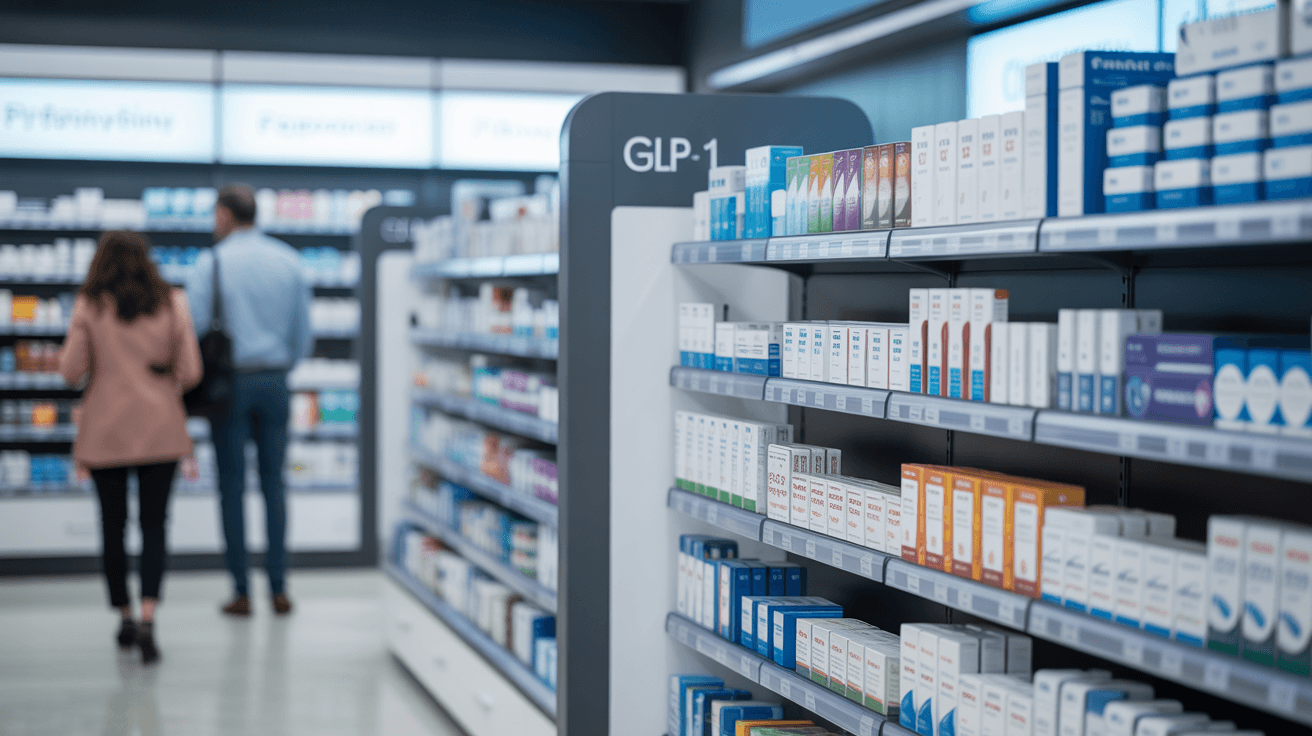
GLP-1 Boom Transforms Retail: Which Stocks Benefit from the Weight-Loss Revolution
This article was created with the help of artificial intelligence.
Active ingredients like semaglutid and tirzepatide are changing not only the treatment of obesity, but also the structure of retail. What began as a medical innovation is developing into an economic factor with far-reaching consequences for consumer goods manufacturers, food retail chains, and the stock market. In April 2026, it is clear: the GLP-1 boom is more than a pharma trend – it is fundamentally changing demand patterns.
Key Takeaways
- The market for compounded GLP-1 medications reached approximately $1 billion in volume in 2024
- Zepbound from Eli Lilly and Wegovy from Novo Nordisk have monthly list prices exceeding $1,000
- Following severe supply shortages in 2023/2024, availability has improved for some medications
- Novo Nordisk received approval for an oral tablet version, which is expected to be cheaper than the injectable Wegovy version
- Food manufacturers and fast-food chains are concerned about structural changes in consumer behavior
- Increased access to GLP-1 medications expands the addressable market for specialized products
What are GLP-1 Medications and How Do They Work?
GLP-1 receptor agonists are active ingredients that mimic the body's natural messenger glucagon-like peptide-1. They suppress appetite, slow gastric emptying, and lead to significant weight loss. Originally developed for treating type 2 diabetes, preparations such as Wegovy (Novo Nordisk) and Zepbound (Eli Lilly) are increasingly being used for weight reduction – sometimes off-label for cosmetic purposes.
This mechanism of action has direct consequences for retail: users report significantly reduced appetite and altered eating habits. What is therapeutically valuable for obesity patients is increasingly concerning food manufacturers and fast-food chains.
Market Development: From Shortages to Mass Supply
Following severe supply shortages in 2023 and 2024, availability has improved for some medications throughout 2024 and early 2025, as supply analyses show. However, availability remains regionally variable. Germany and Europe initially experienced significant supply problems that gradually eased.
The market for compounded GLP-1 preparations – that is, variants individually manufactured in specialized pharmacies – already reached a volume of approximately $1 billion in 2024. These figures illustrate the enormous commercial potential: a lucrative parallel market is emerging even outside original preparations.
With the approval of oral formulations, further market opportunities are opening. Novo Nordisk launched a tablet version that, according to analysts, should be cheaper than injectable Wegovy and deliver similar weight loss results. Andrew Rocco, equity strategist at Zacks Investment Research, called this development a significant milestone for market penetration. The oral formulation could lower barriers to entry and substantially expand the user base.
Price War Among Pharma Giants
Pricing is becoming the decisive competitive factor. Both Zepbound from Eli Lilly and Wegovy from Novo Nordisk are offered at monthly list prices exceeding $1,000, according to Morningstar. For investors, two components are relevant: the prices manufacturers can command, and the out-of-pocket costs for end consumers.
An intense price competition is emerging. Novo Nordisk is attempting to regain market share from Eli Lilly with lower prices for the high-dose Wegovy variant. Despite improved efficacy, it remains difficult for Novo Nordisk to capture significant market share – Eli Lilly has established itself as a serious competitor.
This pricing dynamic influences not only the margins of pharmaceutical manufacturers, but also the question of how quickly GLP-1 medications will diffuse into the broad population. The lower the out-of-pocket costs for patients, the stronger the potential impact on consumer patterns in retail.
Structural Change in Retail: Who Loses?
Food manufacturers, fast-food chains, and traditional retailers are watching developments with concern. GLP-1 medications are fundamentally changing consumer behavior, as industry analyses show. Increasing prevalence could permanently and structurally affect consumption.
Those particularly affected include:
- Fast-food chains: Reduced appetite and altered eating habits directly impact the business model. Frequency and basket sizes are likely to come under pressure.
- Snack and confectionery manufacturers: Impulse purchases and snacking – the core business of many brands – could structurally decline.
- Beverage manufacturers: Sugary soft drinks and high-calorie products face declining demand.
- Food retailers: Altered shopping patterns and lower quantities per household could burden revenues, particularly in high-calorie categories.
The industry's concerns are not unfounded: if GLP-1 medications reach broad population segments, a permanent demand shock occurs. Unlike short-term diet trends, this represents medication-induced, lasting behavioral changes.
New Winners: Specialized Providers on the Rise
While traditional providers face pressure, new market opportunities are emerging. Increased access to GLP-1 medications expands the addressable market for specially developed products, as analysts predict.
Potential beneficiaries:
- Protein and nutritional supplement manufacturers: GLP-1 users have increased need for high-quality protein to preserve muscle mass during weight loss.
- Health food retailers: Specialized retailers for nutrient-dense, low-calorie products could benefit from the demand shift.
- Fitness and wellness providers: Weight loss creates new target groups for sportswear, fitness equipment, and fitness subscriptions.
- Compounding pharmacies: The already billion-dollar market for individually manufactured GLP-1 preparations reached in 2024 offers substantial growth potential.
Companies that respond early to this demand shift and adapt product portfolios gain competitive advantages. Developing specialized product lines for GLP-1 users becomes a strategic differentiator.
Risks and Uncertainties for Investors
The ESG dimension must not be overlooked. The efficacy of GLP-1 medications has led to an increase in off-label demand, particularly for cosmetic purposes. This use raises multiple ESG-related issues – both for patients and for the marketing companies, as Morningstar outlines in a sustainability analysis. An ESG approach enables a more thorough examination of risks not captured by traditional financial analysis.
Additional uncertainties include:
- Reimbursement policies: Coverage by health insurance plans remains unclear in many markets and is regulated differently by region.
- Long-term effects: Comprehensive data on long-term effects and potential side effects from years of use is still lacking.
- Market penetration: Actual adoption rates in the broader population are difficult to predict and depend on price, availability, and social acceptance.
- Competition: Other pharmaceutical companies are developing their own GLP-1 preparations – competition will intensify.
Investment Strategies for the GLP-1 Boom
For investors in the DACH region (Germany, Austria, Switzerland), different approaches present themselves. Direct investments in Novo Nordisk or Eli Lilly offer exposure to market leaders but also carry the risk of intensifying price competition and regulatory intervention. The monthly list prices exceeding $1,000 are under political pressure.
More defensive strategies focus on indirect beneficiaries: protein product providers, specialized food retailers, or health and wellness companies. These participate in structural change without bearing the price risk of pharmaceutical manufacturers.
Selective short positions or underweights in heavily exposed fast-food chains and snack manufacturers could also be part of a GLP-1 investment strategy – but with elevated risk if anticipated demand effects fail to materialize or occur more slowly than expected.
What remains decisive: the GLP-1 revolution is fundamentally changing retail and consumer goods industries. Investors should not only monitor pharmaceutical manufacturers but analyze the entire value chain. Tomorrow's winners may not necessarily sit in pharma labs – but possibly on the shelves of specialized retailers.
Sources
- Research Summary - GLP-1-Boom und seine Auswirkungen auf Einzelhandel und Aktienmärkte 2026
- 2 Unternehmen, die vom Aufschwung der GLP-1-Medikamente zur Gewichtsabnahme profitieren wollen | Morningstar Deutschland
- Gesundheitswesen aktuell 2025 - BARMER
- Abnehmspritzen: Setzen sie Verbraucher und Wirtschaft auf Diät? - Schwäbische
- Medikamente gegen Adipositas: In welche Aktien man jetzt investieren sollte | Morningstar Deutschland
- GLP-1 Abnehmpillen sollen die US-Lebensmittelnachfrage im Jahr 2026 neu gestalten - TradingView News
- GLP-1 in Deutschland 2025: Zugang, Kosten, Rezept & Verfügbarkeit - Myvoy