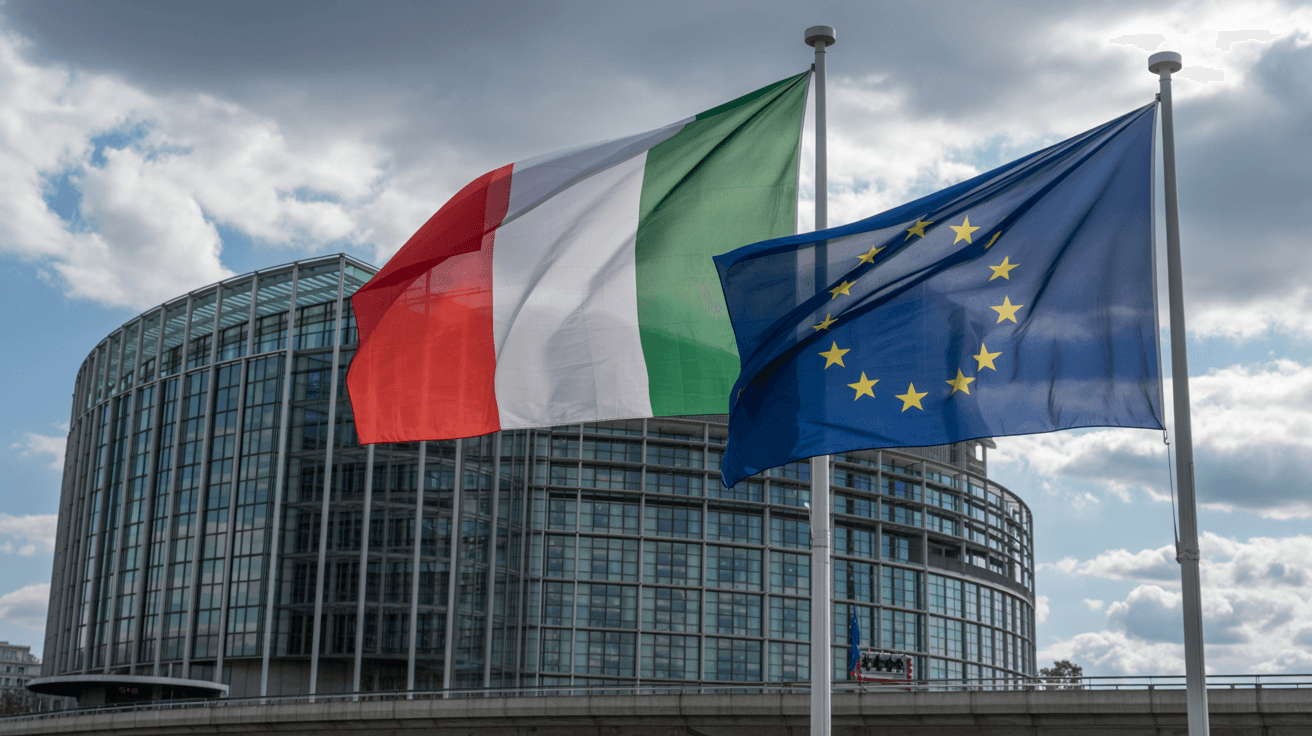
EU Budget Rules Under Scrutiny: Italy Calls for Pause Due to Iran Crisis
This article was created with the help of artificial intelligence.
Italy's Economy Minister Giancarlo Giorgetti is pushing the European Union to loosen debt rules to respond to the economic consequences of the Iran war. The Italian government is advocating for a review of European fiscal rules in light of the energy crisis triggered by the conflict.
Energy Crisis Puts EU Member States Under Pressure
The Iran war has triggered a significant energy crisis in the EU, driving energy prices sharply higher across Europe. Brussels is now warning of a potential new financial crisis, as multi-billion euro aid packages may be required to address energy problems. The EU Commission is calling on consumers to reduce personal energy consumption, while analysts are demanding increased investments in renewable energy.
Energy shortages are particularly affecting countries with high government debt, which have limited financial scope for additional aid packages. Italy, with a debt-to-GDP ratio of over 130 percent, is among the most heavily indebted economies in the eurozone.
Italy's Budget Plan Foresees Rising Debt
According to Italy's current budget plan, the country's debt-to-GDP ratio will continue to rise until 2026. The government approved a draft law with additional expenditures and reduced revenues of 22 billion euros. At the same time, the plan provides for a slow but steady reduction in overall deficit and debt from 2025 onwards – a process that is planned to last four to seven years and is dependent on reform commitments and strategic investments.
These provisions stand in tension with the reformed EU fiscal rules that entered into force on April 30, 2024. The Stability and Growth Pact – the foundation of European budget rules – limits the budget deficit to less than 3 percent of GDP. Over the years, these rules were expanded through numerous amendments, including the Fiscal Compact, the Six-Pack, and the Two-Pack.
Call for More Flexible Rules in Times of Crisis
Economy Minister Giorgetti argues that the exceptional situation caused by the Iran war justifies an adjustment of debt rules. Italy's position raises the question of whether the reformed fiscal rules offer sufficient flexibility for geopolitical crises or whether further exceptions are required.
Italy's call is likely to receive a mixed response in Brussels. While Southern European countries tend to advocate for more flexibility, Northern EU member states in particular insist on compliance with debt rules. The Federal Republic of Germany, as the largest net contributor and advocate of strict budgetary discipline, pushed for clear provisions on debt reduction when the Stability and Growth Pact was reformed in 2024.
Access to EU Support Mechanisms Tied to Fiscal Compact
The importance of budget rules is also evident in access to financial support: only member states that have signed the Fiscal Compact can receive financial support from the European Stability Mechanism. The European Stability Mechanism (ESM) is a permanent rescue fund for euro area countries in financial difficulties and provides assistance loans under strict conditions.
This link between budgetary discipline and access to aid was introduced after the 2008 financial crisis to ensure financial stability in the eurozone. Any softening of the rules could call this principle into question.
Energy Transition as a Long-Term Solution
Beyond the short-term debate on debt rules, analysts are calling for increased investments in renewable energy as a structural response to the energy crisis. Such investments could in the long term reduce dependence on imported fossil fuels and lower vulnerability to geopolitical crises.
The EU fiscal rules already include various exceptions for investments. Whether these are sufficient to finance the necessary investments in the energy transition without jeopardizing budgetary discipline will remain a central question of European economic policy in the coming months.
Sources
- Italiens Wirtschaftsminister Giorgetti: EU sollte Lockerung der Schuldenregeln erwägen
- Der Iran-Krieg und Europas Energiekrise
- Italien sieht im neuen Haushaltsplan einen Anstieg der Schuldenquote bis 2026
- Stabilitäts- und Wachstumspakt - Bundesfinanzministerium
- Der EU-Rahmen für die Fiskalpolitik - Europäisches Parlament