Costco Without Delivery Strategy: Why the Retailer Can Ignore the Delivery Battle
This article was created with the help of artificial intelligence.
Key Takeaways
- Costco carries only around 3,700 items per warehouse, while Walmart offers over 50,000 products—this radical assortment limitation is central to the treasure-hunt strategy (Wall Street Journal, April 13, 2026).
- The private label Kirkland Signature accounts for approximately 28 percent of Costco revenue and is described by Fortune as highly trusted by customers (StrategyLens, May 5, 2026; Fortune, September 23, 2026).
- According to Mojo Sales and Branding, customers typically do not reach for a shopping list in the first 60 seconds after entering a Costco warehouse, showing that impulse purchases dominate planned purchases (April 2, 2026).
- Costco made a 'rare error with a new delivery service' according to the Tri-City Herald, suggesting selective but problematic attempts to enter the delivery world (September 23, 2026).
- Fortune reported on September 23, 2026 that Costco 'has the luxury of watching the delivery race,' implying a deliberate strategic decision against direct Amazon competition.
While the e-commerce boom forces many retailers to make billion-dollar investments in last-mile delivery, Costco takes a different approach. The warehouse operator largely eschews the race for fastest delivery—and makes it a deliberate strategy. According to Fortune on September 23, 2026, Costco "has the luxury of watching the delivery race" instead of competing directly with Amazon and other delivery-focused retailers.
However, non-participation has not been without tensions. The Tri-City Herald reported on September 23, 2026 of a "rare error with a new delivery service," suggesting that Costco made selective forays into the delivery world. Additionally, the company offered deliveries according to al.com on August 14, 2026 that were "even faster than Amazon's two-day delivery"—a hint at selective offerings despite the underlying strategy.
The Treasure-Hunt Model as Shield
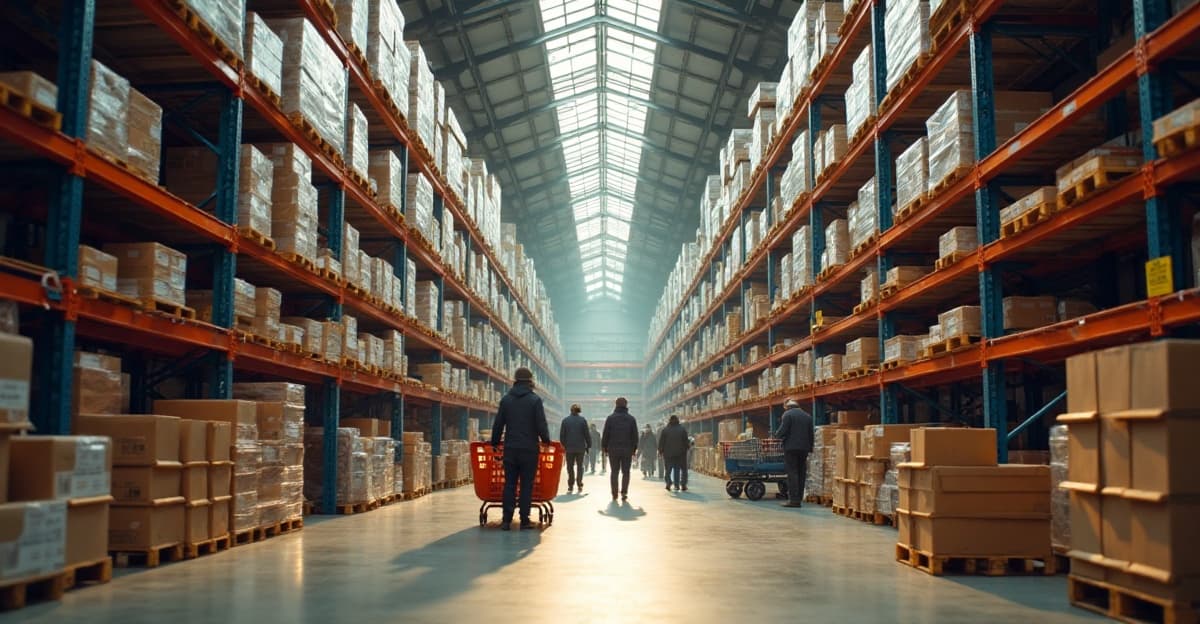
Costco's central defense against digital competition is the so-called treasure-hunt experience. The concept works through radically limited product selection: each warehouse carries around 3,700 items (stock-keeping units), as the Wall Street Journal analyzed on April 13, 2026. For comparison: Walmart offers over 50,000 products. Item rotation is constantly updated to motivate members to visit repeatedly and encourage impulse purchases.
The Tri-City Herald from September 23, 2026 describes the psychological mechanism: "Anyone who has ever entered a warehouse club to buy paper towels or a rotisserie chicken and left with a television, seasonal items, or clothing has experienced the true Costco treasure-hunt experience." This "come for milk, leave with a kayak" phenomenon is something many customers can relate to.
Mojo Sales and Branding found on April 2, 2026 that customers on a typical Saturday morning typically do not "reach for a shopping list" in the first 60 seconds after entering a Costco warehouse—an indication that treasure-hunt dynamics override planned purchasing decisions.
Why Amazon Cannot Copy the Model
Fortune identified Costco customer motivation on September 23, 2026: "They shop there because of the curated selection, competitive prices, the highly trusted Kirkland Signature brand, and the treasure-hunt aspect of shopping in the vast warehouses; they might discover a jar of luxurious La Mer moisturizer."
Titanstockanalysis.com argued on January 21, 2026 that Amazon's "fast and free" Prime shipping "undermines the necessity of a physical warehouse visit." The treasure-hunt effect is therefore Costco's primary defense against digital competition. The business model operates in competition over "location density and digital convenience" versus "giants that offer more comfort but charge higher per-unit prices."
Kirkland Signature as Trust Anchor
The private label Kirkland Signature accounts for approximately 28 percent of revenue, as StrategyLens calculated on May 5, 2026. Fortune described the brand on September 23, 2026 as "highly trusted" by customers. Sesame Disk assessed on February 23, 2026 that this private label "is difficult for pure online competitors to replicate" and strengthens Costco's reputation for value.
StrategyLens summarized on May 5, 2026 that Costco's "operational simplicity, combined with its strong private label," creates a treasure-hunt experience that is "difficult for high-volume competitors to replicate"—an indication of the model's resilience despite e-commerce pressure.
The Unresolved E-Commerce Tension
The strategic challenge remains. Quartz formulated the dilemma as early as October 9, 2024: "As Costco continues to push into e-commerce, it faces the enormous task of expanding its online presence without sacrificing the unique treasure-hunt shopping experience that defines its warehouses." This tension between physical experience and digital expansion remains unresolved to this day.
The membership-based model positions Costco in competition for wallet share against retailers that offer more convenience but charge higher per-unit prices. The question remains whether refusing to participate in the delivery battle is sustainable long-term—or whether Costco will lose market share to more convenient, albeit more expensive alternatives.
Sources
- Why Costco has the luxury of sitting out the delivery arms race | Fortune
- Costco makes rare mistake with new delivery service | Tri-City Herald
- Costco - Competitions - titanstockanalysis.com
- Costco Treasure Hunt Strategy: The Retail Psychology Every Roadshow Brand Must Master
- Costco's Strategy and Competitive Analysis - StrategyLens
- Costco’s Strategic Expansion in 2026: What Retail Leaders Need to Know - Sesame Disk
- Costco is offering a feature to compete with Amazon - al.com
- Costco's conundrum: How to compete online without killing that 'treasure hunt' vibe
- Behind Costco's Treasure-Hunt Shopping Strategy | WSJ The Economics Of Costco