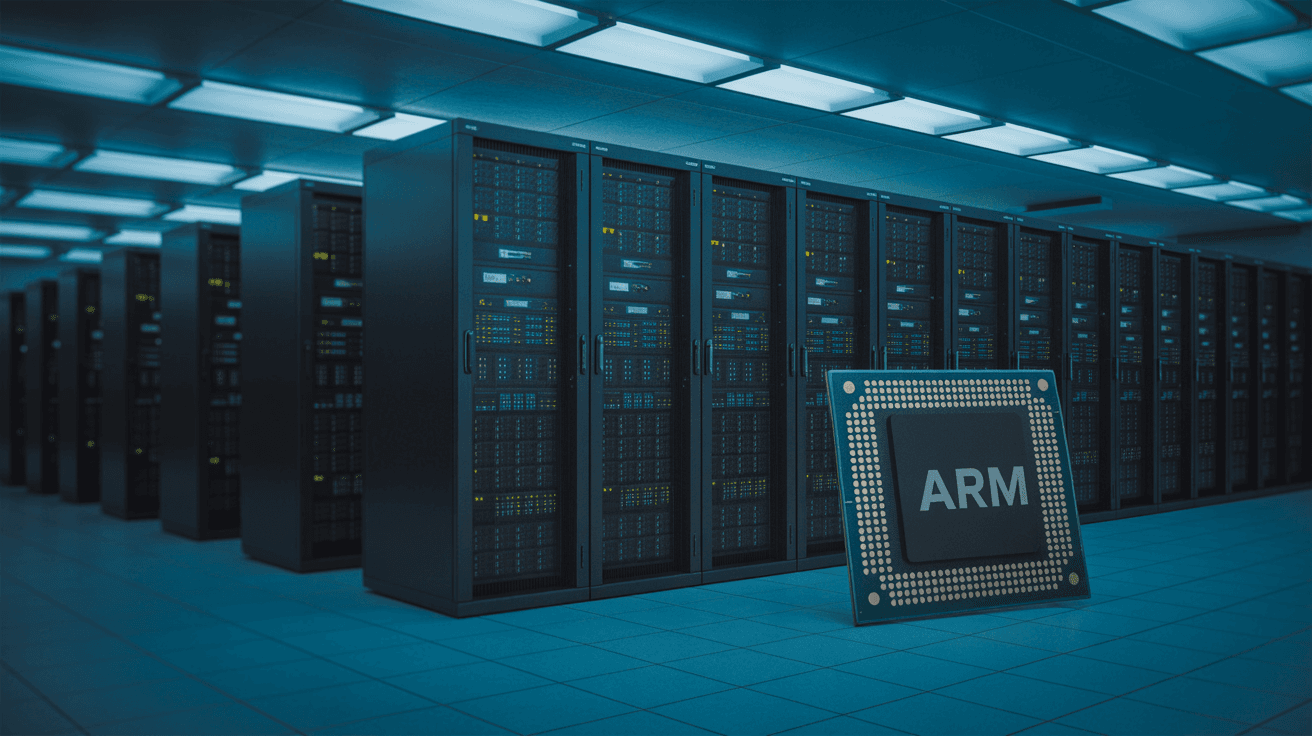
Cloud Giants Turn to Arm Chips: The Shift Away from Intel and AMD
This article was created with the help of artificial intelligence.
Key Takeaways
- According to Arm Holdings, nearly 50 percent of computing power delivered to hyperscalers in 2025 was already running on Arm architecture.
- Counterpoint Research predicts that by 2029 or 2030, approximately 90 percent of all AI servers will use custom processors based on Arm architecture.
- Netflix reduced annual costs by $15 million by migrating video encoding to Amazon's Graviton processors and increased processing speed by 20 percent.
- Graviton instances are 18 to 20 percent cheaper per hour than comparable x86-based offerings.
- Arm Holdings benefits as licensor and receives fees for both licenses and each shipped chip, regardless of the manufacturer.
The global cloud market is undergoing a fundamental technology shift: Amazon Web Services (AWS), Microsoft, Google, and Meta are systematically replacing conventional x86 processors with Arm-based custom chips in their server infrastructure. While it may sound like a purely industry-specific topic, the implications are far-reaching for investors – established chip manufacturers like Intel and AMD are facing mounting pressure as a result.
Arm Takes Over Data Centers
According to Arm Holdings, nearly 50 percent of computing power delivered to leading hyperscalers – operators of massive cloud data centers – was already running on Arm architecture in 2025. Counterpoint Research paints an even more dramatic picture: by 2029 or 2030, 90 percent of all AI servers should be using custom processors based on Arm architecture. Intel and AMD's traditional x86 architecture would then be relegated to a minor role.
The reason for this strategic shift lies in concrete economic advantages. Cloud companies are developing their own chips to reduce costs, improve energy efficiency, and become less dependent on external suppliers.
Amazon Leads the Way with Graviton
Amazon demonstrates how profitable the transition can be with its Graviton processor family. Already, half of all new AWS instances – virtual servers – are based on Amazon's own chips. A concrete example: Netflix reduced annual costs by $15 million by migrating video encoding to Graviton processors while simultaneously increasing processing speed by 20 percent.
In direct comparison, Graviton instances are 18 to 20 percent cheaper per hour than comparable x86-based offerings. Given the scale at which cloud providers operate, such savings accumulate into substantial competitive advantages.
Winners and Losers in the Shift
For Intel and AMD, this development means a gradual loss of their lucrative data center server business. Both companies have dominated this market with their x86 architecture for decades – a position that is now crumbling.
However, specialized Arm processor manufacturers like Ampere Computing also face challenges: if all major hyperscalers develop their own chips rather than purchasing finished processors, the addressable market for third-party vendors shrinks significantly.
Arm Holdings itself benefits as the licensor of the underlying architecture. The British firm receives fees both for licenses and for each chip shipped – regardless of whether Amazon, Microsoft, or Google manufactures the processors.
Implications for Investors
The shift toward Arm-based custom chips is not a short-term trend but a structural transformation of cloud infrastructure. Investors should monitor how this dynamic impacts the financial results of the affected companies – particularly Intel and AMD, which must realign their data center divisions.