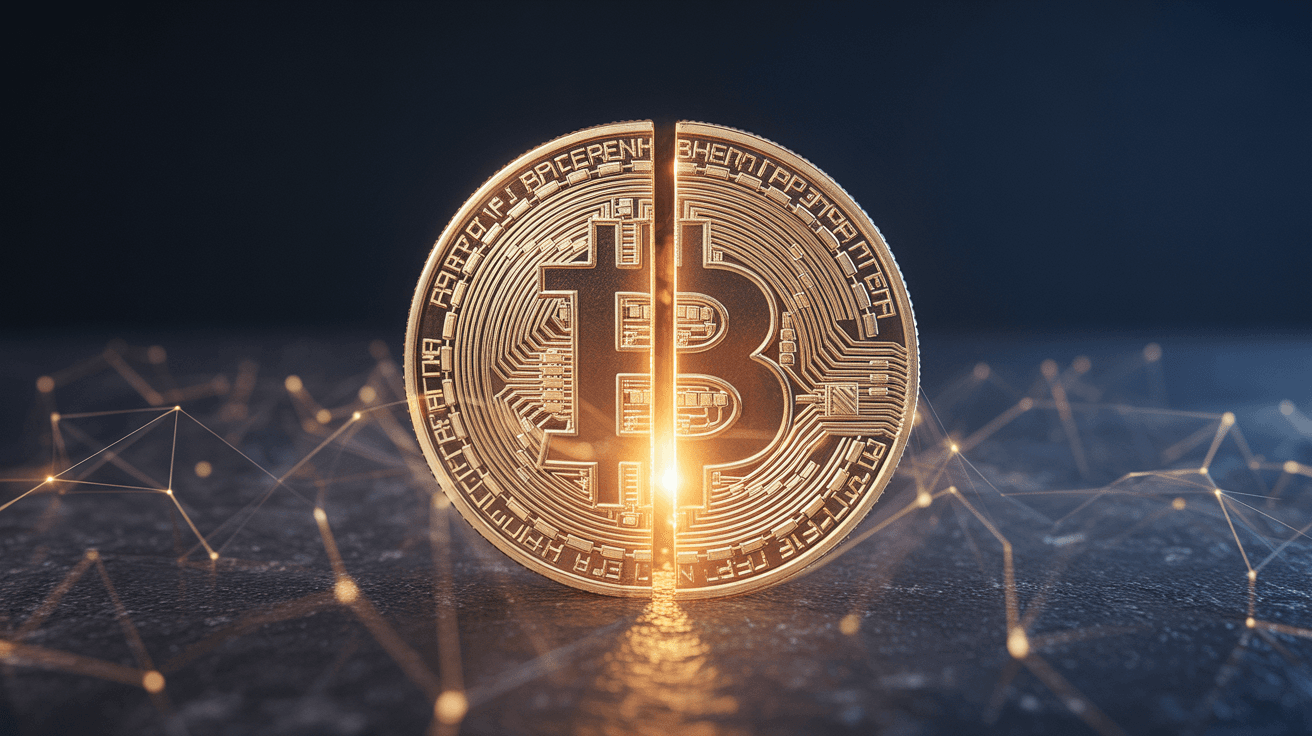
Bitcoin Halving 2026: Historical Patterns Point to Delayed Price Gains
This article was created with the help of artificial intelligence.
Key Takeaways
- The Bitcoin halving in May 2026 halved the block reward to around 1.56 BTC per block, causing the rate of coin creation to decline systematically.
- Following the 2012 halving, Bitcoin rose over 700 percent within six to twelve months; after 2016 it rose 177 percent, and after 2020 it rose 261 percent.
- Historically, the strongest price gains occurred not immediately after the halving, but with a typical delay of 12 to 17 months.
- After a halving, the hash rate often declines as unprofitable miners with higher operating costs shut down their equipment, until the network reorganizes more efficiently.
- The artificial scarcity of supply supports long-term expectations of rising prices, but requires investors to have patience and risk tolerance.
Bitcoin is again in the spotlight in May 2026: the so-called halving, an automatic event in the Bitcoin protocol, has halved the reward for miners and could drive the market into a volatile phase. Historical data shows that such events regularly trigger strong price movements – but not always immediately.
What does the halving mean in concrete terms?
In a Bitcoin halving, the block reward that miners receive for adding new blocks to the blockchain is halved. Since the first halving in November 2012, this mechanism repeats roughly every four years. The block reward has been 3.125 BTC per block since the 2024 halving. The current 2026 halving should have halved this reward again – to approximately 1.56 BTC.
This artificial scarcity acts as a supply control: fewer new bitcoins enter the market, which tends to support the price when demand remains constant or increases. The maximum number of 21 million bitcoin remains unchanged, but the rate at which new coins are created decreases systematically.
Historical patterns with delay
The past provides clear evidence: following the 2012 halving, Bitcoin rose more than 700 percent within six to twelve months. The 2016 halving led to a gain of 177 percent in the second half of the year. After the 2020 halving, the cryptocurrency posted an increase of 261 percent – the price reached around 49,504 US dollars in May 2021, despite significant fluctuations in between.
A recurring pattern: the strongest price gains occurred not immediately after the halving, but with a delay of 12 to 17 months. Even though interim setbacks occurred, prices after this period lay significantly above pre-halving levels.
Volatility and mining impacts
The expected market volatility has concrete reasons. Immediately after a halving, the hash rate – the computing power that secures the network – often declines. Miners with higher operating costs shut down their equipment because the halved reward no longer makes sense. Historically, such declines were followed by an efficiency improvement: inefficient operators exit the market, while efficient miners expand their capacity.
For retail investors in German-speaking regions, this means: after new all-time highs, markets tend to be overheated. Long positions accumulate, which favours short-term corrections. In the long term, however, historical evidence speaks to a positive picture – provided investors bring the necessary patience and risk tolerance.
Classification for investors
The halving is no guarantee of price gains, but the mechanics of scarce supply and historical patterns support the expectation of rising prices. Those who remain invested or enter now should expect substantial fluctuations and adopt a multi-year perspective. Diversification across different asset classes remains essential for Swiss, German and Austrian investors.