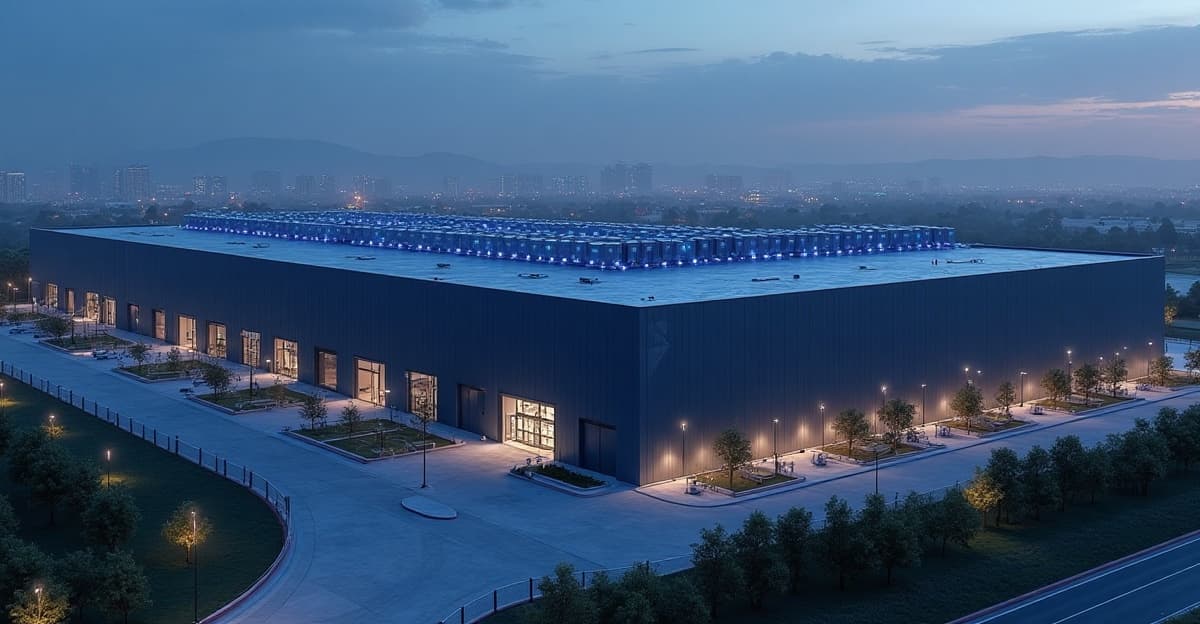
Anthropic negotiates 1-GW data center: which infrastructure stocks profit from AI boom
This article was created with the help of artificial intelligence.
Key Takeaways
- As of September 2026, Anthropic is negotiating with Stream Data Centers over leasing up to one gigawatt of computing capacity, which would require an investment of at least 40 billion US dollars.
- Google is reportedly to serve as credit guarantor for lease payments, with neither the scope nor amount of the guarantee nor other contract details such as location, term or lease value being known.
- The planned data centers are expected to be equipped with Tensor Processing Units from Google and Broadcom, with NVIDIA GPUs also remaining as an option and the final hardware configuration not yet determined.
- All sources consistently emphasize the preliminary nature of the discussions, no agreement has been signed, and none of the companies involved has officially confirmed the negotiations.
- The project demonstrates the trend toward direct infrastructure control among AI companies and offers opportunities for data center developers, chip manufacturers such as NVIDIA and Broadcom, and providers of server and storage solutions like Super Micro Computer.
AI company Anthropic, backed by Amazon, is negotiating with Stream Data Centers over leasing up to one gigawatt of computing capacity. According to The Information on September 22, 2026, the discussions are in an early and preliminary phase. The project would require an investment of at least 40 billion US dollars.
Stream Data Centers is majority-owned by Apollo Global Management. What's notable about the structure: Google is reportedly to serve as a credit guarantor for lease payments. No agreement has been signed to date, and none of the companies involved has officially confirmed the negotiations.
Triangular structure between Anthropic, Apollo and Google
The potential agreement demonstrates an unusual constellation among three parties: Anthropic as tenant, Stream Data Centers as operator, and Google as potential guarantor. According to Four Week MBA's analysis, the significance lies less in the gigawatt figure itself than in this structure.
A credit guarantee serves as a standalone product in infrastructure deals. When a data center developer provides capital for a gigawatt-scale project, it must secure the tenant's creditworthiness over many years. If the tenant's credit profile is insufficient, a third party with stronger creditworthiness typically steps in as guarantor. Who assumes this guarantee provides insight into the relationships among the parties involved.
Hardware configuration still open
The planned facilities are expected to be equipped with Tensor Processing Units (TPUs) from Google and Broadcom. However, NVIDIA GPUs or other AI chips remain as options. The final hardware configuration has not yet been determined since no contract has been concluded.
One gigawatt of power corresponds to the capacity required to operate hundreds of thousands of high-performance AI chips. Such scales signal the growing infrastructure needs for training and operating large language models.
Open questions on contract structure
Key details of the agreement remain unclear. Neither the lease value, contract term, data center location, nor start date are known. The scope and amount of credit guarantee demanded by Google have also not been specified.
All sources consistently emphasize the preliminary nature of the discussions. Negotiations at this stage can fail or be fundamentally reshaped before an agreement is reached.
Infrastructure stocks in focus for investors
The project illustrates the ongoing trend toward direct control over computing infrastructure among AI companies. Rather than relying exclusively on cloud providers, companies like Anthropic are negotiating for dedicated or exclusively leased capacity.
Several segments are coming into focus for investors:
- Data center developers: Companies like Apollo Global Management, which realize major projects through subsidiaries like Stream Data Centers, benefit from long-term lease agreements with stable cash flows.
- Chip manufacturers: NVIDIA, Broadcom and Google develop specialized processors for AI workloads. Demand for TPUs and GPUs grows with each new data center project.
- Server infrastructure: According to reports, providers like Super Micro Computer are gaining importance, designing server and storage solutions specifically for AI data centers.
- Power supply: One gigawatt of power requires significant investments in power supply, cooling and network connections. Infrastructure companies in the energy sector could benefit indirectly.
Broader market development
The Anthropic project exemplifies a shift in the AI sector. While hyperscalers like Amazon Web Services, Microsoft Azure and Google Cloud continue to be the primary providers of computing capacity, specialized AI firms are seeking ways to reduce their dependency and better control costs.
The willingness to invest billions in dedicated infrastructure demonstrates the expected long-term nature of the AI boom. At the same time, the need for a credit guarantee from Google reveals the financial risks of such major projects.
Assessment for investors
The reported 40-billion-dollar volume makes clear the scale at which AI infrastructure expansion is moving. This yields several considerations for investors in the DACH region:
First, established data center REITs (Real Estate Investment Trusts) and infrastructure funds should benefit from rising demand. Second, chip manufacturers remain direct beneficiaries, even if valuations have already risen significantly. Third, suppliers for cooling, power supply and network technology are gaining relevance.
The early phase of negotiations, however, calls for caution regarding short-term speculation. Concrete investment decisions require solid contract closures, not preliminary discussions.
The DAX was trading at 25,695 points on September 22, 2026, up 0.21 percent. The development reflects overall stable market sentiment, while technology and infrastructure stocks remain in focus for investors.