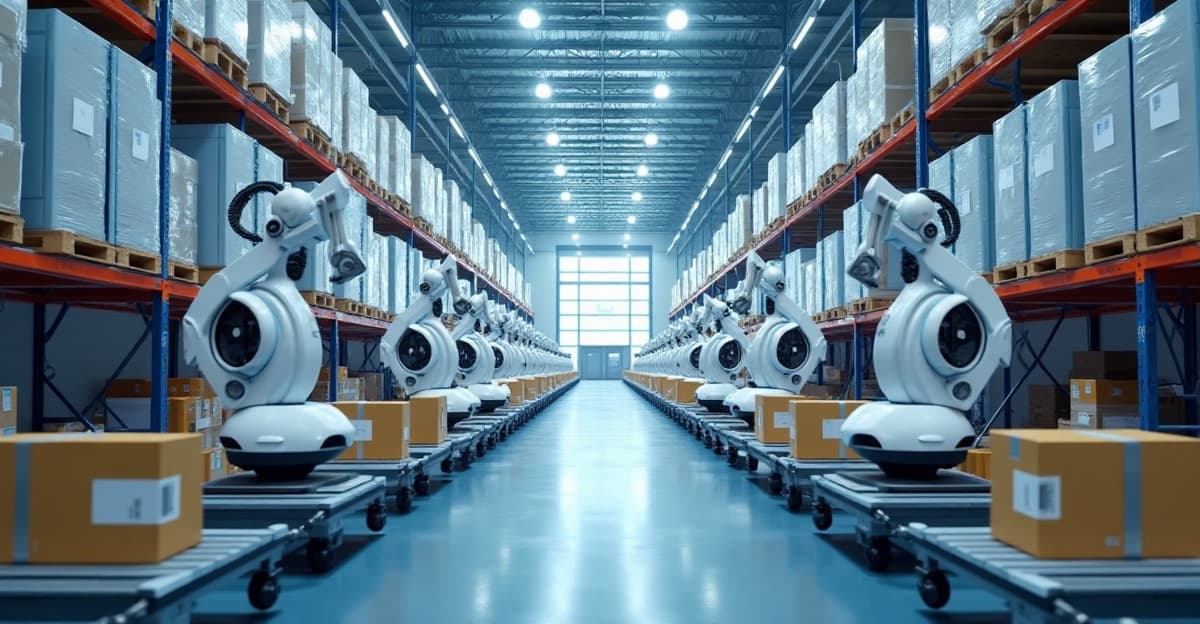
Amazon Plans Fully Automated 'Tetromino' Warehouses: Logistics Revolution
This article was created with the help of artificial intelligence.
Key Takeaways
- Amazon is developing a new generation of fully automated delivery stations under the internal name 'Project Tetromino', which are intended to process packages at approximately 2.5 times the rate of previous facilities.
- The phased rollout calls for a single pilot location to go live in 2028 with an estimated budget of $103 million, five additional locations to follow in 2029 with approximately $85 million each, and by the end of 2029 the cumulative investment volume would amount to over $530 million.
- The Tetromino stations use artificial intelligence and robotics to receive packages from fulfillment centers, sort them, and prepare them for delivery, thereby automating one of the most expensive and difficult manual processes in the logistics network.
- Boxbot's system, which could represent a core technology of Tetromino, can accelerate the vehicle loading process by up to tenfold according to the company's own claims and transports packages using artificial intelligence for sequencing.
- Amazon announced in July 2026 that it would more than double its robotic arms fleet in the current year and employs automated software systems that provide workplace recommendations to warehouse workers.
Amazon is developing a new generation of fully automated delivery stations under the internal name 'Project Tetromino', which are intended to process packages at approximately 2.5 times the rate of previous facilities. This emerges from an internal planning document that Business Insider was able to review on August 24, 2026.
The Tetromino stations are highly automated delivery stations – the final hub in the shipping process before packages are handed over to driver fleets. The stations receive packages from fulfillment centers, sort them using artificial intelligence and robotics, and prepare them for delivery. The goal is to automate one of the most expensive and difficult manual processes in the logistics network.
Phased Rollout Starting 2028 with Over $530 Million in Investments
According to the internal planning document, Amazon's roadmap calls for a phased rollout: a single pilot location is to go live in 2028 with an estimated budget of $103 million. In 2029, five additional locations are to follow, with investments of approximately $85 million per location – totaling $425 million. Ten additional locations are planned for 2030, though specific investment amounts have not yet been specified for this phase.
By the end of 2029, the cumulative investment volume would amount to over $530 million. These figures come from an internal document from August 2026 and were published by Business Insider and other media outlets on August 24, 2026.
Amazon Calls Project an "Early-Stage Concept"
A Amazon spokesperson told Business Insider on August 24, 2026, that Tetromino is an "early-stage concept." The financial figures and roadmap mentioned in the document are "inaccurate" and do not reflect current plans. The spokesperson emphasized: "We're always exploring and testing new technologies across our operations to improve safety and the delivery experience for customers. Like any early-stage concept, this is one of many initiatives we regularly evaluate, and plans evolve significantly as we learn."
Despite these caveats, Project Tetromino remains an indicator of Amazon's strategic direction toward highly automated logistics processes.
Boxbot Technology as Key Element
According to the internal planning document, one of the core technologies of Tetromino could come from AI and robotics startup Boxbot. Boxbot's system transports packages from conveyor belts onto pallets for storage and subsequently uses artificial intelligence to retrieve packages and sequence them for delivery. According to Boxbot's website, the system can accelerate the vehicle loading process by up to tenfold.
This technology aims to solve one of the most persistent challenges in logistics: organizing and loading packages into vehicles remains difficult and expensive to automate according to industry analysts. The last mile is considered a bottleneck as it brings together short-term planning, sorting, and fleet handoff. Higher throughput could improve utilization, reduce bottlenecks, and lower per-package logistics costs – particularly with rising package volumes or tighter delivery windows.
Broader Automation Strategy at Amazon
The Tetromino initiative fits into Amazon's comprehensive automation strategy. In July 2026, the company announced in its earnings call that it would more than double its robotic arms fleet in the current year. Additionally, Amazon employs automated software systems that provide workplace recommendations to warehouse workers when workloads change.
For several years, Amazon has been working with robotic systems in its warehouses. In October 2025, Tye Brady, Chief Technologist for Amazon Robotics, presented new AI and robotics programs. Specific robot models such as Sparrow, Cardinal, and Proteus are gradually taking over tasks such as transporting storage containers and transport pallets, while human workers are relieved of unpopular and tedious activities.
Strategic Implications for Investors
For investors, the capital expenditure issue remains highly relevant. Amazon's stock valuation is likely to increasingly depend on whether the anticipated productivity gains justify the investments in the medium to long term. The phased investment program over several years signals a pattern where pilot phases quickly transition into broader scaling.
GuruFocus characterized the initiative on August 25, 2026, as a "major initiative" for developing the next generation of automated delivery warehouses with the goal of improving package processing efficiency. Automation is increasingly being planned as a strategic productivity lever – not merely as a pure efficiency measure.
The question of how quickly highly automated delivery stations pay for themselves and whether they stabilize or improve margins in Amazon's logistics business will remain crucial for the company's valuation. The Tetromino project exemplifies Amazon's approach of pursuing even costly automation projects with long time horizons.